
Photo from Pexels

By Andrea Clark
Published Fall 2026
Special thanks to Mason Scholes for editing and research contributions.
Viewpoints published by Ballard Brief are not necessarily endorsed by BYU or The Church of Jesus Christ of Latter-day Saints.
Summary+
Regional economic inequality refers to the uneven distribution of resources across different areas within a country, leading to significant disparities in wealth, development, and quality of life.1 In China, regional economic inequality is evident in the urban-rural divide, which negatively impacts the nation's stability and growth.2 The Hukou system registers individuals in a specific place of residence—either rural or urban—determining their eligibility for social services, education, healthcare, and employment opportunities, thus intensifying the divide.3 Economic reforms and market liberalizationThe reduction of government regulations and restrictions in an effort to promote competition and greater economic growth.14 also prioritize urban, coastal cities over rural regions.4 Additionally, fiscal policies, including taxation, expenditure, and government aid transfers benefit urban areas significantly more than rural ones.5 These high levels of inequality contribute to social instability as the quality of life declines in the countryside.6 Economic inequality also perpetuates intergenerational poverty by reinforcing disparities at both institutional and social levels, creating a cycle of limited opportunities in education and healthcare.7 China's regional development efforts, such as the Great Western Development program, have generated economic growth in Western regions. However, income disparities between major cities and rural areas persist.8 Addressing these inequalities will require substantial fiscal reforms, including progressive tax policies and increased social spending, to ensure more equitable development across all regions.9
Key Takeaways+
- China has one of the highest urban-rural income disparities in the world, with urban households averaging over three times the per capita income of rural households.159
- The Hukou system, which controls regional movement in China, greatly predicts an individual’s rights, privileges, and socioeconomic well-being.160
- Chinese market liberalization, while a key factor in the nation’s remarkable economic growth, has also worsened regional inequality.161
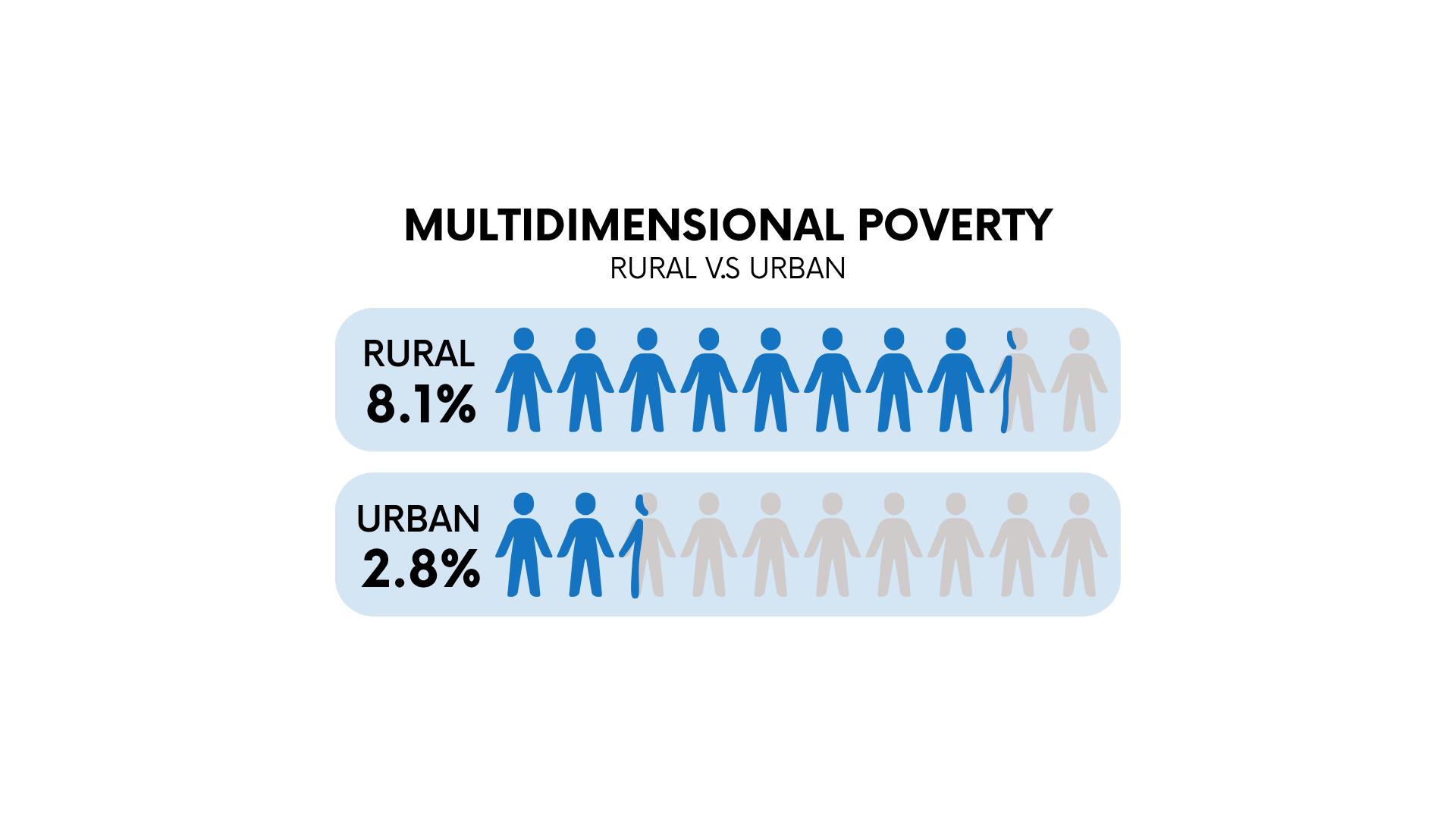
- In rural China, 8.1% of the population is considered poor, while in urban areas, 2.8% of people live in poverty.162
- Rural communities find it more difficult to access resources such as education and healthcare compared to more prosperous urban areas.163
- Because of the Great Western Development Plan, the GDP of the western rural region increased at an average annual rate of 11.7% from 2000–2008, but more policies are needed to continue to decrease inequality.164 165
Key Terms+
Fiscal expenditure—The amount of money the government spends each year.10
Five-Year Plan—A collection of social and economic development programs and initiatives implemented by the Chinese Communist Party (CCP) beginning in 1953.11
Gini Coefficient—A measure that assesses income inequality within countries by analyzing income distributions among populations.12
Mainland—The geopolitical area under the direct control of the People’s Republic of China, excluding regions of Taiwan, Macau, and Hong Kong.13
Market liberalization—The reduction of government regulations and restrictions in an effort to promote competition and greater economic growth.14
Organization for Economic Cooperation and Development (OECD)—An international organization made up of 38 countries that aims to develop evidence-based policies to enhance global prosperity, equality, and well-being through collaboration and knowledge sharing.15
Primary Industry—Industry that obtains raw materials through mining, fishing, forestry, or agriculture.16
Secondary Industry—Industry that converts raw materials into consumer products.17
Special Economic Zone—A specific region that operates under distinct economic regulations compared to other areas of the same country.18
Yuan (¥)—The official currency of China. As of 2025, one Chinese yuan equals 0.14 US dollars.19
Context
Q: What is regional economic inequality, and how is it typically measured?
A: Regional economic inequality is an unequal distribution of resources and wealth that creates disparities in economic growth, living standards, and social mobility between a country’s various provinces, municipalities, autonomous regions, and other administrative divisions.20 Inequality can be assessed through various approaches; one method, known as absolute measurement, compares income levels across regions at a given point in time. Absolute measurement can be conducted using multiple indicators, including the Gini coefficientA measure that assesses income inequality within countries by analyzing income distributions among populations.12 or other various income categories (including per capita, average household, or median for each region).21 The Gini coefficient is one of the most widely used measurements, capturing disparities on a scale from 0 (perfect equality) to 1 (perfect inequality).22 The Gini coefficient provides a straightforward assessment of the level of income difference between regions without considering changes in economic growth rates.23 Relative measurement, on the other hand, focuses on changes in regional inequality over time, considering a region’s rate of economic growth and the average imbalance of income.24 There are also composite measures that consider economic inequality among several factors. One of these composite measurements is the UN Development Programme’s human development index (HDI).25 HDI is determined by aggregating scores in various indicators such as life expectancy, literacy rate, and the multidimensional poverty index, which determine basic dimensions of human development, with higher HDI scores showing elevated levels of development.26
Q: Which demographic does regional economic inequality in China affect, and how does this compare to other countries?
A: Regional economic inequality in China is most pronounced between affluent coastal regions and less developed inland areas.27 In terms of wealth inequality, the top 0.0001% own 5.8% of China’s entire wealth, a proportion roughly equivalent to that held by the bottom 50% of the population, in part due to geographical location.28 Urban regions experience higher levels of development and economic prosperity than rural regions, often due to rural regions’ lack of access to resources such as education and healthcare. These differences lead to significant disparities in living standards and quality of life for rural residents.29 As a result, the rural per capita consumption expenditures and household income are lower than in urban areas. In 2024, per capita consumption expenditure for urban households was ¥34,557, compared with ¥19,280 for rural households.30 Additionally, the median disposable income of urban households was ¥49,302, compared with the median rural disposable income of ¥23,119, a ratio of 2.13.31 32 In contrast, most countries with a similar level of development have an urban-rural income ratio below 1.5, positioning China as one of the countries with the highest urban-rural income disparities globally.33
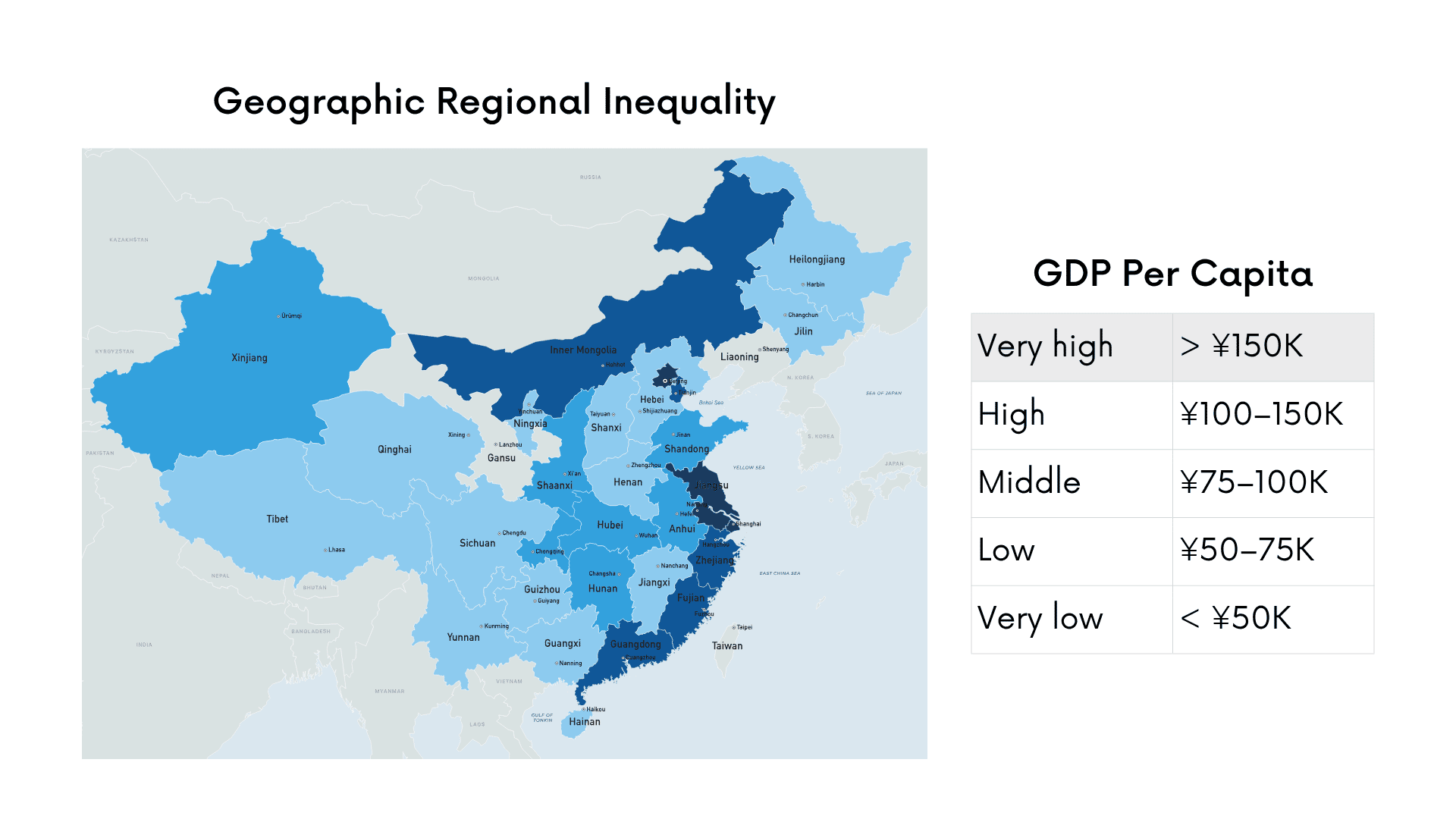
Additionally, although coastal cities such as Shanghai, Beijing, and Guangzhou take up about 1.4% of the nation’s land mass, they are more prosperous and developed than inland regions because of trade, foreign investment, and industrialization.34 Inland and western areas like Gansu and Guizhou often face challenges including limited infrastructure and fewer economic opportunities, leading to disparities in development and living standards.35 In 2021, HDI measurements for urban provinces in China were notably high, with Beijing at 0.907, Shanghai at 0.880, and Tianjin at 0.844, reflecting a level of human development similar to that of Italy, which has an HDI of 0.906. In contrast, rural provinces such as Tibet, Guizhou, and Gansu had much lower HDI scores of 0.614, 0.690, and 0.693, respectively, similar to the small island of Vanuatu, which also has an HDI of 0.614.36 According to the National Bureau of Statistics, China’s Gini coefficientA measure that assesses income inequality within countries by analyzing income distributions among populations.12 climbed from 0.29 in 1981 to 0.51 in 2024.37 This figure is significantly above the 0.4 threshold often viewed as a warning level for social instability, placing China among the world’s most unequal economies.38 As of December 2024, within the Organization for Economic Cooperation and Development (OECD)An international organization made up of 38 countries that aims to develop evidence-based policies to enhance global prosperity, equality, and well-being through collaboration and knowledge sharing.15, only South Africa reports a higher Gini coefficient at 0.62, while just five other countries—India, Brazil, Costa Rica, Chile, and Mexico—exceed the 0.4 level.39 Similar trends of disproportionality are found in access to infrastructure, employment opportunities, and living standards between regions, all of which contribute to variations in economic growth, social mobility, and quality of life across the country.40
Q: When did regional economic inequality in China begin, and how has it changed over time?
A: Since the start of economic reforms in 1978, China has seen incredible economic growth and poverty reduction; however, these accomplishments have also been accompanied by widening inequality gaps.41 Under the reign of Deng Xiaoping, China transitioned from a centrally planned economy (where activity is controlled by the government) to a more market-oriented one (where activity is governed by market forces of supply and demand) while still maintaining the dominance of the Communist Party.42 Over time, regional inequality in China evolved in several ways. From 1978 to 1991, much of the economic disparities between coastal and inland regions stemmed from the country's shift to opening its labor market and products to foreign markets. This policy sparked rapid growth, particularly in coastal areas due to their prime position for international trade.43 From 1992 to 2003, China intensified market reforms and expanded opening-up policies, accelerating industrialization and urbanization in primary and secondary industries, primarily in coastal regions. The Western Development Strategy was launched in 2000, along with subsequent revitalization initiatives, which reshaped the dynamics of China’s regional economic growth. Relocation of secondary industries through industrial transfers spurred their expansion in the west, and rising costs in the east encouraged the growth of the west’s service sector. At the same time, a northward shift in primary industries marked the beginning of a broader relocation of GDP concentration.44

Photo from Unsplash
Contributing Factors
Hukou System
China’s Hukou system, the country’s household registration policy, has exacerbated the socioeconomic divide between rural and urban populations, leading to persistent disparities in income and living standards. First introduced in China in 1951, the original purpose of the Hukou system was to maintain social order by controlling population movement through limited mobility.45 Initially, people traveled and declared residency easily. In 1955, however, China experienced a large influx of rural residents moving into the big cities (Shanghai, Chongqing, Beijing, etc.), prompting a new directive that prevented unplanned migration and established government control over China’s population movement.46
The Hukou system contributes to economic inequality by controlling regional movement in China. As of 2024, individuals are allowed to register in only one place of residence, determining their eligibility for various social services and benefits.47 As a result, one’s status within the Hukou system is a strong indicator of the rights, privileges, and socioeconomic well-being afforded to the individual.48 Individuals in urban areas typically have better access to high-quality education, healthcare, infrastructure, and public services such as insurance, subsidies, and pensions. In contrast, citizens in rural areas often receive basic services and limited infrastructure.49 These differences in services often result in economic inequality among rural and urban residents. For example, according to a 2018 study, hukou holders earn 6% to 8% higher incomes than rural hukou holders, indicating a persistent income disparity between the two groups. Rural holders are unable to change their Hukou status and unable to access public services in these urban areas.50 Similarly, a 2014 study found that in urban areas where Hukou status was disclosed, rural migrant students had their experimental earnings decrease by over thirteen percentiles compared to native urban students.51 In contrast, efforts to reform Hukou by helping integrate rural migrants into urban cities have proven to reduce rural-urban income disparities, showcasing the prominent role the Hukou system has on regional economic inequality in China.52
The Hukou system also perpetuates inequality by creating disparities when funding social welfare programs. In 1993, a social safety net called Dibao began in Shanghai to provide government support to individuals in poverty.53 Individuals who fall below China’s minimum household income standard are qualified to receive government financial transfers.54 Shanghai's success led other local governments to adopt similar programs, and in 1997, the central government mandated the establishment of welfare systems in all urban areas before 1999.55 The rural Dibao was introduced in 2007, completing the nationwide social safety net eight years after the establishment of the welfare system in urban China.56 While disparities between urban and rural Dibao standards decreased from 2006 to 2016, rural citizens continued to receive substantially less support, receiving 63.1% of the assistance allocated to urban residents in 2016.57 Additionally, significant regional disproportions persist, with Dibao standards in developed areas like Beijing and Shanghai being nearly double those in less developed regions (such as Qinghai and Ningxia) as of early 2018.58 Rural, inland communities in China continue to remain economically disadvantaged compared to their coastal, urban counterparts.
The Hukou system caused regional inequality in China by creating two societies: the urban class, who work in the protected and prioritized industrial sector and have better access to social welfare and citizenship, and the rural class, who are tied to agriculture and must more frequently provide for themselves.59 Hukou conversion, or a change from rural to urban status, is possible but still heavily controlled and permitted only when it aligns with China’s industrialization strategy.60 As such, despite 63% of the nation’s population living in urban regions, only 45% hold urban hukou registration.61 When rural residents are allowed to change their residency status, they often face restrictions in relocating to cities—limiting their access to higher-paying jobs, quality education, and essential social services compared to those with urban registration.62 For individuals who move from rural to urban hukou at the age of 30, total gross income is 5.2% lower than individuals with the same qualifications who are urban natives, displaying the role the hukou system has on economic freedom in China.63
Market Liberalization
Since 1976, China has prioritized fast-paced economic development by focusing on efficiency, comparative advantage, foreign investment, and trade.64 Market liberalizationThe reduction of government regulations and restrictions in an effort to promote competition and greater economic growth.14, driven by policy and reforms, was a key factor in the nation’s remarkable economic growth, but also worsened regional inequality. For example, in 1986, Xiaoping famously stated, “Our policy is to let some people and some areas get rich first.”65 Thus, the income disparity between urban and rural areas in China has been steadily widening since the mid-1980s, characterized by two distinct waves of increase. The initial wave extended from the early 1980s to the early 1990s following the open-door policy, while the second wave occurred from 1997 to 2009 following China's accession to the World Trade Organization.66
The 1978 open-door policy helped China globalize its market, but also increased regional economic inequality. This new strategy aimed to rebuild China’s socioeconomic foundations after the Cultural Revolution by introducing foreign trade and investment while maintaining a socialist system of governance.67 With the shift to an open economic policy, China’s economy grew rapidly—per capita in 1998 was fourteen times higher than in 1980—revealing stark wealth gaps that emerged between coast and interior, and between cities and countryside.68 Since then, the ratio of urban to rural income has fluctuated at three to one, indicating that the mean per capita income in metropolitan China is approximately triple that of rural areas.69
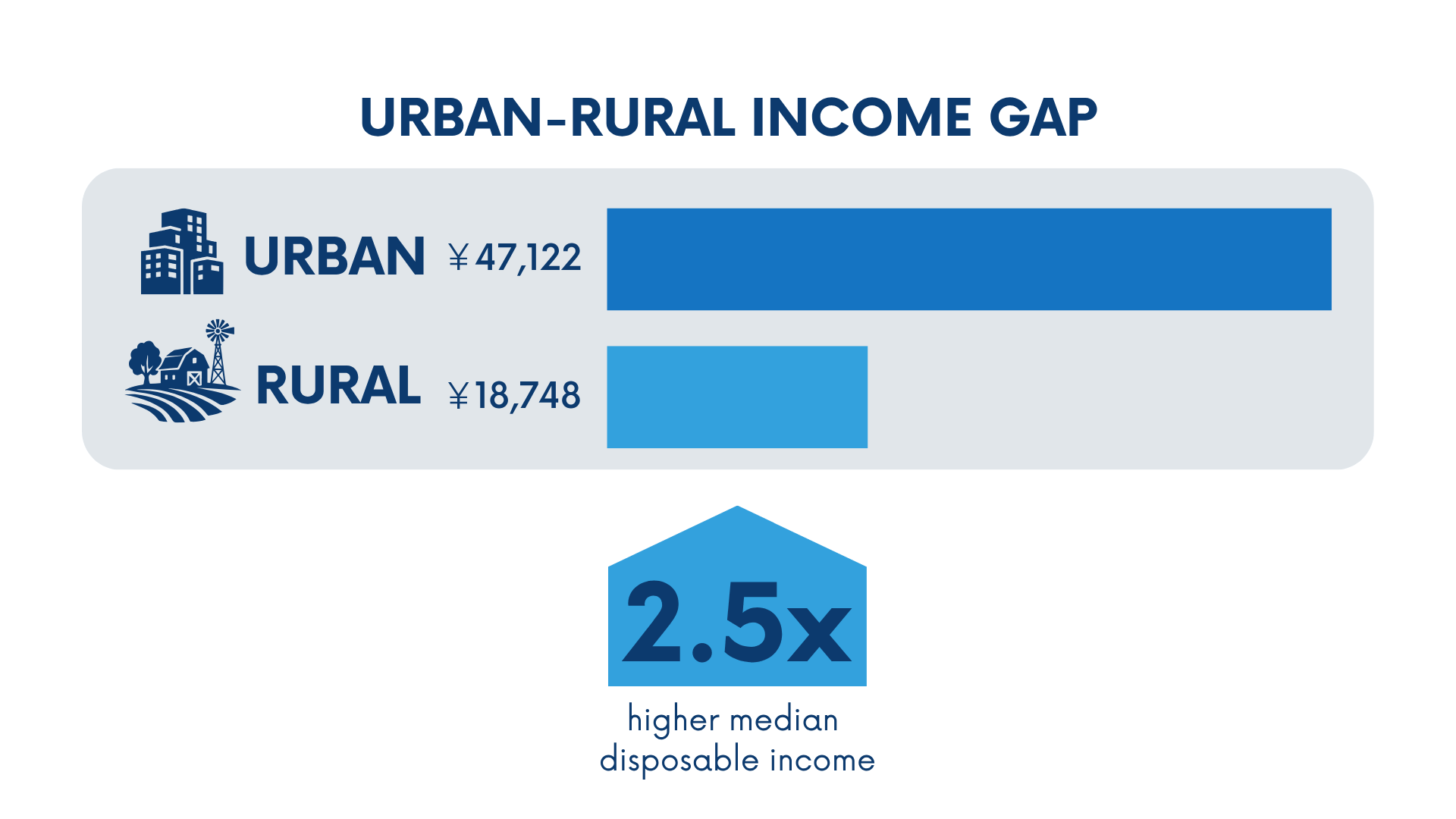
Additionally, the formation of unequal investment in special economic zonesA specific region that operates under distinct economic regulations compared to other areas of the same country.18 (SEZs) is one of the largest contributors to regional inequality.70 As a part of the open-door policy and coastal development strategy (CDS), China established SEZs in coastal regions, which played a crucial role in integrating the country into the global market. China’s SEZs were designed to stimulate rapid economic growth through greater government support, give tax and business incentives that led to more foreign direct investment (FDI), and strengthen links to the global market.71 Cities like Beijing, Shanghai, and Shenzhen became epicenters of economic activity, further attracting talent, capital, and infrastructure.72 SEZ’s impact on regional inequality can be seen through China’s wage gap; in 1988, the wage gap between China’s 90th and 10th percentile was ¥2,000. By 2002, after the establishment of SEZs, that gap had grown to ¥10,000, with coastal SEZs having significantly higher wages than other rural cities.73 This difference continues to be evident as of 2023 through household income. The mean per capita income in urban China is more than double that in rural areas, with the median per capita disposable income of urban residents at ¥47,122 compared to ¥18,748.74 This difference demonstrates the impact market liberalizationThe reduction of government regulations and restrictions in an effort to promote competition and greater economic growth.14 in SEZs had on economic inequality.
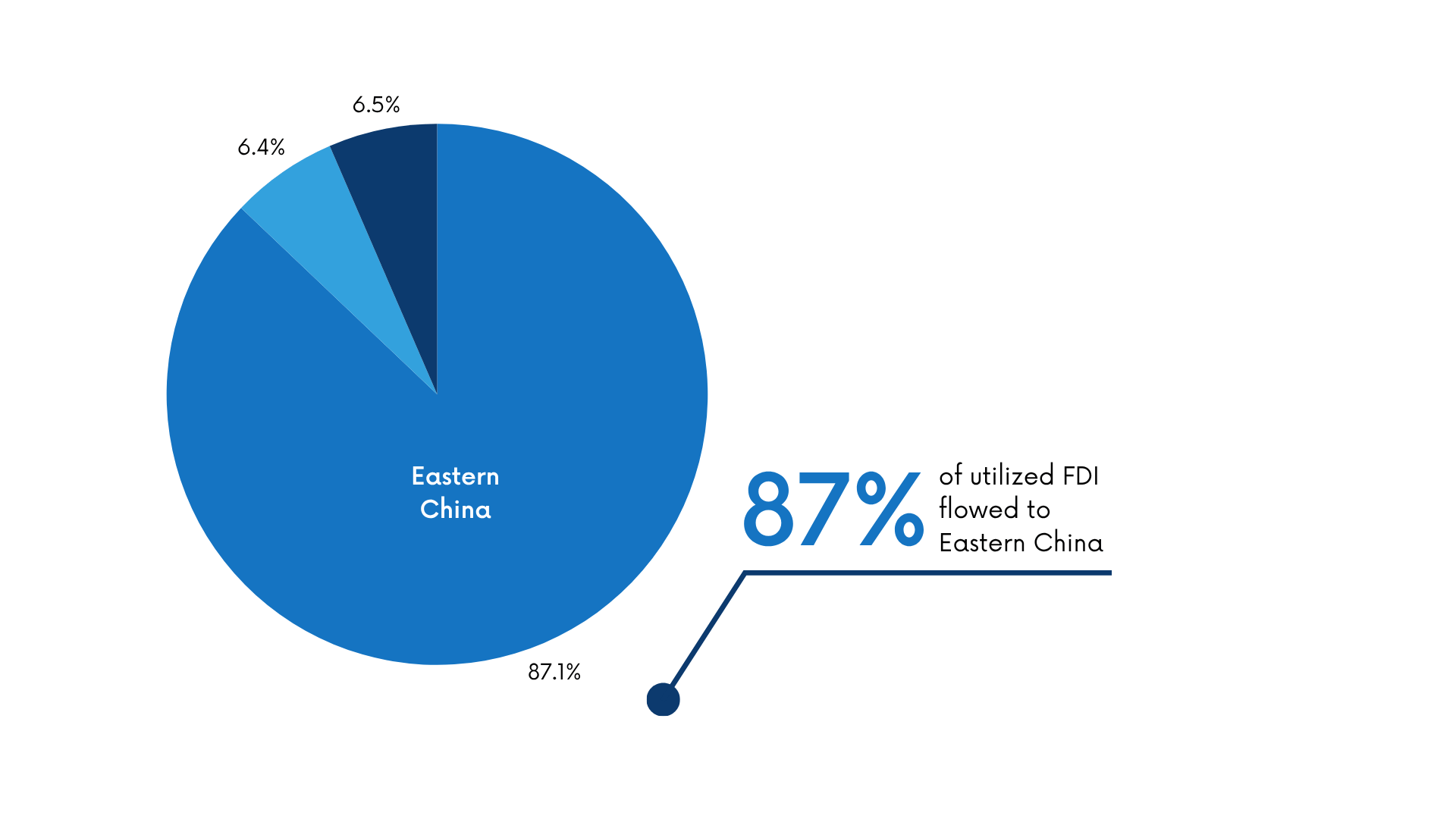
China’s decision to join the World Trade Organization (also known as WTO accession) in December 2001 also widened economic inequality.75 This milestone also significantly accelerated market liberalizationThe reduction of government regulations and restrictions in an effort to promote competition and greater economic growth.14, leading to profound economic changes through the reduction of tariffs, dismantling of trade barriers, and subsequent rapid growth.76 Despite economic growth associated with trade liberalization, disparities between urban and rural areas widened across income, labor markets, and educational access.77 WTO accession accelerated export-led growth in coastal, urban regions, which attracted foreign investment, developed industries, and created higher-paying jobs for skilled workers.78 However, inland and rural areas, more reliant on agriculture, benefited far less, widening regional and urban–rural income gaps. Income inequality also expanded post-WTO accession and peaked in 2009, with the per capita income of urban households averaging over three times that of rural households at ¥17,174.7 ($2,365.50) compared to ¥5,153.2 ($709.76).79 Income inequality improved slightly since 2009 due to policy and investment shifts, but the urban to rural income gap remains substantial by international standards. For example, China’s top three provinces (Guangdong, Jiangsu, and Shandong) account for over a quarter of the country’s total GDP, while the least developed province (Tibet) contributes 0.2%.80
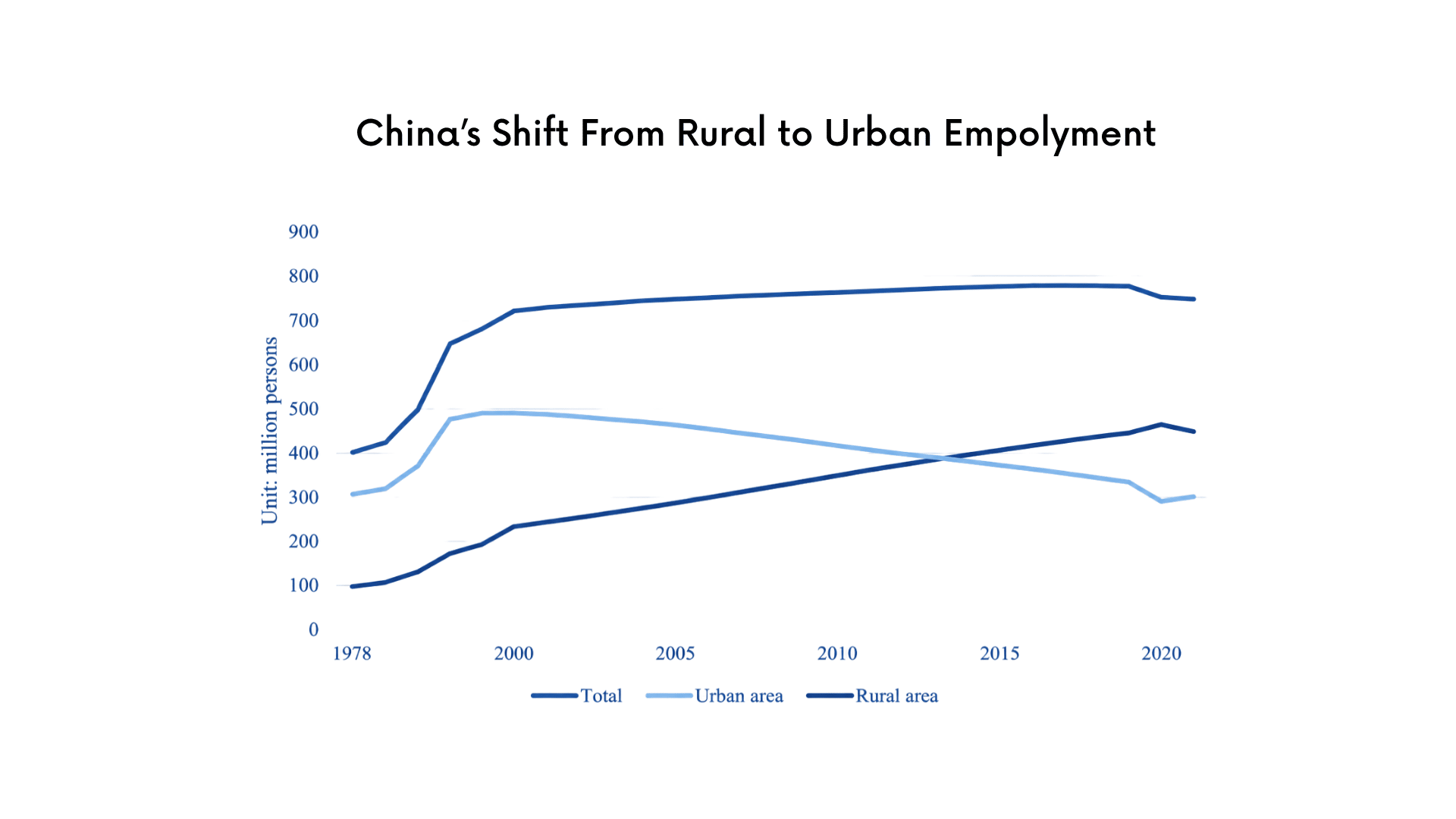
In addition to increasing economic inequality through per capita income, WTO accession increased economic inequality by altering China’s labor market. With the expansion of labor-intensive industries, migration of rural individuals to urban centers in eastern China increased, leading to a concentration of informal employment there.81 The most significant shift in China’s labor market from 1978 to 2021 was the rapid growth of urban employment, which surpassed rural employment for the first time in 2014. Total employment in urban areas increased from 241.23 million to 446.73 million from 2001 to 2021, with these new jobs comprising 59.8% of the country’s total employment.82 In comparison, rural employment rates decreased from 500 million to 300 million.83 These employment rates reflect the expanding opportunities and economic development in urban areas due to market liberalizationThe reduction of government regulations and restrictions in an effort to promote competition and greater economic growth.14, which were not present in rural regions.
Uneven Government Fiscal Policies
China’s fiscal policies also exacerbated the country’s regional economic inequality. These policies are categorized as taxation, fiscal expenditureThe amount of money the government spends each year.10, and fiscal transfers.84
Under China’s tax policies, rural residents, who typically have lower incomes and living standards than their urban counterparts, face heavier tax burdens. In 2005, Chinese agrarian households—those whose livelihoods depend on farming and agricultural work—paid tax rates that were generally 8–10 percentage points higher than urban households when both direct and indirect taxes were included, along with additional hidden costs such as school tuition and compulsory labor services.85 Although the Chinese government has set a guideline that farmers should not pay more than 5% of their annual income in taxes, a 2015 World Bank study found that agricultural households in China often bear a much higher burden.86 On average, rural counties face a tax burden of 12%, with some provinces reporting figures as high as 28% in certain areas.87 This disparity is due to one of the most burdensome taxes for agrarian citizens, the agricultural tax, under which the government levies four types of farming taxes, five township taxes, and three village taxes.88 In contrast, because urban residents do not engage in agricultural production, they do not have to pay this tax.89 Although the basic agricultural tax began phasing out in 2005, providing rural residents with an additional 4 billion USD per year, this elimination is unlikely to significantly reduce inequality.90 With approximately 800 million individuals affected, only about $5 is returned per farmer annually. Residents in urban areas are required to pay taxes if they earn more than $1,200 a year, but agrarians pay taxes on $353—their average annual income.91
Additionally, the Chinese government’s levels of fiscal expenditureThe amount of money the government spends each year.10 and fiscal transfers vary greatly between regions, with over half of all government spending occurring at the sub-provincial level. This variance in expenditures causes significant inequalities not only between provinces but also within them.92 Since local government spending is largely dependent on the revenue it generates, a region’s level of economic development primarily determines the amount and quality of public services the government will provide.93 According to World Bank estimates, wealthier provinces generate approximately twenty times the revenue of poorer ones.94 Additionally, the richest provinces have about 48 times the per capita spending of the poorest rural areas.95 China’s current system reinforces regional inequalities by refunding locally collected funds based on the growth of value-added and consumption taxes—both tied directly to the level of regional economic activity.96 As a result, wealthier areas receive more refunds from the central government than poorer areas due to higher tax revenue growth. Additionally, cities in the top decile allocate an average of 15% of their GDP to social welfare, whereas cities in the bottom decile spend 3% of their GDP on such programs.97 This percentage is low compared to OECD countries, where the average percent of GDP allocated to social welfare is 21%.98 With little financial investment from central and local governments, regional economic inequality persists in China.

Photo from Pexels
Consequences
Social Instability
China's significant regional economic inequality has fueled social instability.99 While China has maintained macroeconomic stability, low inflation, and high growth rates, social discontent has grown as income inequality, particularly affecting marginalized, rural populations, widens.100 Factors including job instability, income uncertainty, environmental concerns, and personal safety fears have become increasingly prominent issues in Chinese society.101 Widespread inequity in the early 2000s sparked social unrest, with petitions and demonstrations emerging across different social groups and levels of government.102 For example, although China’s economy boomed from 2001-2003, the number of incidents of social unrest rose from 40,000 to 58,000, due to a lack of support for the rural workforce.103 Mass labor disputes, including strikes, work stoppages, and other forms of collective action, have been rising in mainlandThe geopolitical area under the direct control of the People’s Republic of China, excluding regions of Taiwan, Macau, and Hong Kong.13 China.
One of the main indicators of social unrest and instability is the level that people are content with their living conditions. This content is determined by the reality of one’s social status, but also their perceived satisfaction.105 In 2001, one of the top five concerns for individuals in rural China were increases in inequality and the income gap.106 Later, in 2007, a separate study found that 91% of Chinese citizens expressed concern over the growing income gap, and 80% viewed the widening disparity as entirely unacceptable.107 More recently, a 2022 study analyzing the Chinese General Social Survey found that income inequality had a significant negative impact on the happiness of individuals living in rural China.108 These studies reveal that Chinese citizens are aware of social unfairness due to regional economic inequality and perceive it as an issue in their lives. This perception has the potential to drive continued social unrest and instability in China.109
Intergenerational Poverty
Economic inequality perpetuates intergenerational poverty in multiple ways. In developing countries, the Global Multidimensional Poverty Index (MPI) measures acute poverty by multiplying the percentage of people who are poor by the average proportion of deprivations experienced by those people.110 A higher MPI indicates more severe poverty and poorer living conditions in a given area. In the rural regions of China, the MPI is 0.034 with 8.1% of the population considered poor, while in urban areas, the MPI is 0.011 with 2.8% of people living in poverty.111 These individuals and households suffer from multidimensional levels of poverty, including malnutrition, poor quality drinking water, and physical insecurity.112 At an institutional level, limiting access to economic opportunities creates a cycle where socioeconomic disadvantages are inherited across generations despite efforts toward social mobility and economic advancement.113 This process is seen in rural China, where income and the economic situation of parents highly determine children’s economic mobility.114 “龙生龙,凤生凤,老鼠的儿子会打洞” is an ancient Chinese proverb that directly translates to “dragons give birth to dragons, phoenixes give birth to phoenixes, and mice's sons can dig holes.”115 Chinese culture is deeply influenced by the belief in the importance of family and the inheritance of certain traits, which further perpetuates generational poverty.116 Economic inequality undermines confidence in the possibility of socioeconomic advancement, thereby reducing the likelihood that youth from low-income backgrounds will pursue behaviors linked to achieving financial success.117 Living in a low-income region impacts economic independence, living habits, and cognitive abilities among residents.118 Individuals, especially adolescents, make decisions based on perceived returns. Thus, in rural areas, where the distance to reach predetermined levels of success is greater, there is a feeling that achievement is unlikely—a term coined ‘economic despair.’119 Moreover, social capital tends to be limited in China’s western rural regions, which heightens the risk of intergenerational poverty among low-income families.120
In addition to human capital, physical and financial capital also have profound influences on intergenerational poverty. A child from a family in rural China with poor housing conditions, typically built with material that is not durable, has a 37% higher chance of experiencing intergenerational transmission of poverty (ITP). Additionally, children in households with fewer appliances face an 8.1% increased likelihood of falling into ITP.121 Long-term poverty in China is concentrated in remote and disadvantaged regions, with 90% of all poverty-stricken people from mountainous, remote areas, largely because of these major financial disparities between rural and urban communities.122 Economic development in the form of business opportunities, credit access, and financial capital are concentrated on China’s eastern coast, contributing to the persistence of poverty in the west and the challenges in overcoming it.123
Photo from Pexels
Education and Healthcare Disparities
Economic inequality across regions in China amplifies opportunity disparities in sectors such as education and healthcare and creates significant barriers for individuals and communities in less-developed regions. Rural communities find it increasingly more difficult to access these essential resources and opportunities compared to their counterparts in more prosperous areas, therefore perpetuating economic disadvantages and limiting social mobility.124
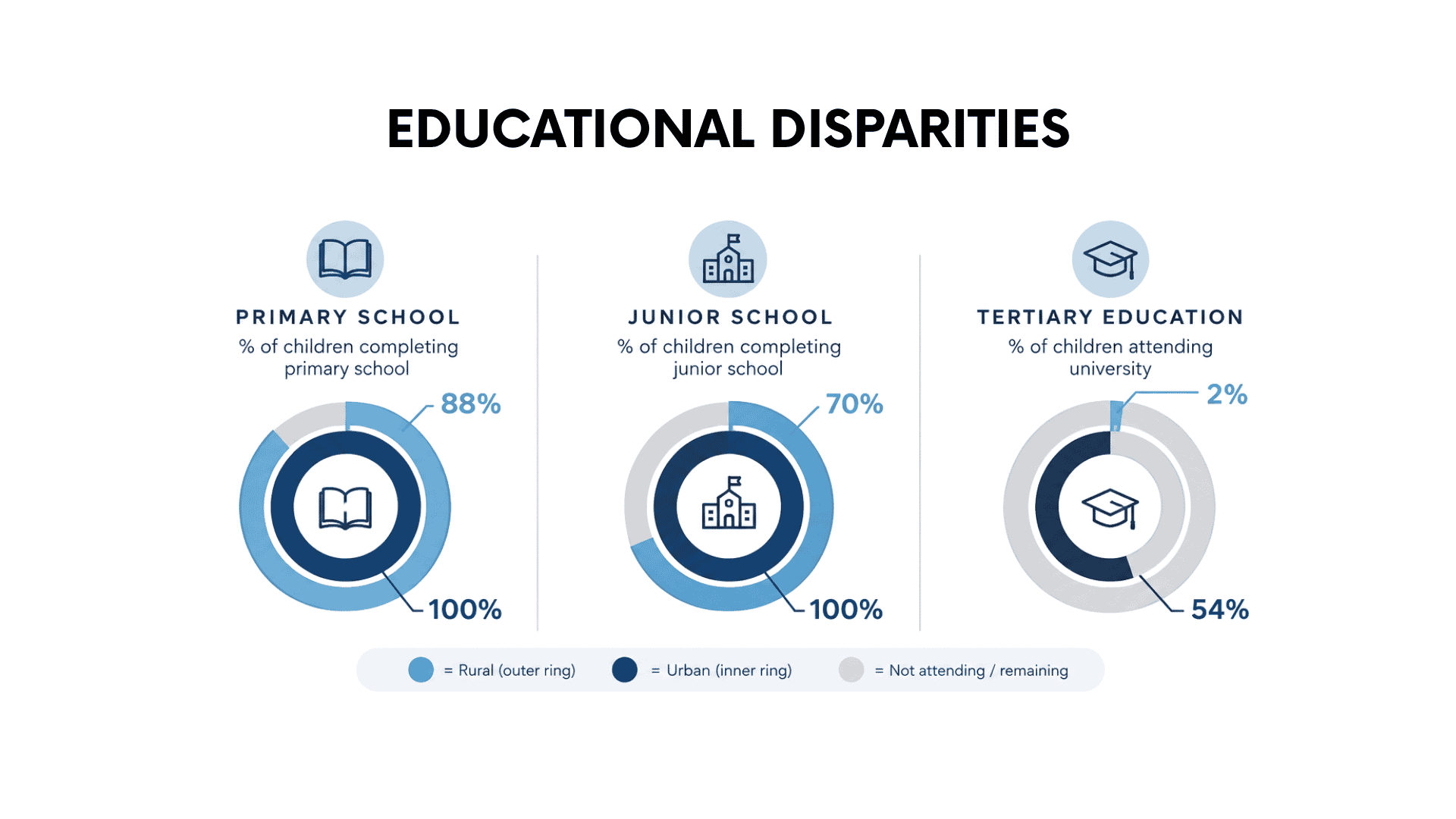
Income inequality in China contributes significantly to educational inequality. Research indicates that rural residents have lower educational attainment; approximately 90% of rural children completed primary school compared to 100% of those living in metropolitan areas. As children progress in their education, the discrepancy increases—70% of rural children complete junior high school, compared to 100% of urban children.125 For tertiary education, 2% of rural children enroll, compared to 54% of urban children.126 Furthermore, because of China’s decentralized fiscal system, local governments are responsible for funding education and other institutions within their jurisdiction.127 Consequently, urban areas typically have better-funded schools with additional resources, qualified teachers, and advanced technology and facilities.128 By the early 2000s, Shanghai spent ten times as much per student on primary education compared to the rural province of Guizhou.129 Without local governmental support, rural families are left to pay for further schooling but lack the means to do so, resulting in struggles with outdated infrastructure, a shortage of skilled educators, and a lack of resources.130 As a result, rural students face greater challenges in accessing quality education, which can limit their academic achievements.131 In urban and rural samples, the coefficient for education upward mobility (EUM) is significant at the 1% level, with urban areas showing a higher coefficient (0.086) compared to rural areas (0.071).132 This coefficient indicates that individuals educated in urban China are more likely to experience upward social mobility than individuals educated in rural China, highlighting the role regional disparity has on educational opportunities and future economic growth.
In addition to education, disparities in household income also contribute to unequal access to healthcare across different regions of China.133 In rural areas, healthcare coverage is more limited and expensive in relation to average incomes. Further, the allocation of healthcare expenditures is heavily skewed towards urban hospitals.134 Urban spending reached 2668.61 Yuan19 per capita compared to 748.8 for rural areas in 2006.135 Between 1978–2009, China significantly increased its health spending relative to GDP, rising from 3.02% to 5.15%. However, market-oriented health reforms led to a shift toward greater reliance on out-of-pocket payments, reaching a peak of 59.97% of total health expenditures in 2001 from about 20% when economic reforms began in 1978.136 Out-of-pocket payments disproportionately affect low-income households, hindering their access to healthcare and exacerbating financial burdens associated with illness due to the regressive nature of these payments.137 Additionally, despite near-universal health insurance coverage in China, income is still the strongest factor influencing access to healthcare. Income accounts for 124.6% of the inequity seen for outpatient services and 128.7% for inpatient services, displaying that wealthier individuals receive a disproportionately higher share of healthcare relative to their medical needs.138 With wealth in China frequently being determined by the region one lives in, inequality in healthcare utilization and health outcomes also persist along the urban-rural divide.139
Practices
The Great Western Development Program
Due to the significant variations in social instability, poverty, and opportunities between coastal and inland regions, China emphasized regional economic inequality as an important issue in its 140 As a result of this emphasis, China’s government began promoting several policies and programs that work toward inequality reduction. In 1999, China announced a multibillion-dollar strategy to develop the western region: the Great Western Development Program (西部大开发), and has revised its content and focus in each subsequent Five-Year PlanA collection of social and economic development programs and initiatives implemented by the Chinese Communist Party (CCP) beginning in 1953.11.141 The project has outlined increased investment in infrastructure, environmental protection, and market liberalizationThe reduction of government regulations and restrictions in an effort to promote competition and greater economic growth.14 to boost economic growth and development in western China.142 The central government promoted the energy, equipment, biotechnical, and pharmaceutical industries to foster economic diversification and attract higher levels of investment.
Impact
The primary investment of the GWD plan was infrastructure, including over 1.69 million kilometers of paved roads, 29,000 kilometers of highways, 12,700 kilometers of railways, and 29 new airports.143 In addition to improving infrastructure, the Chinese government also created three new economic zones in western China: the Chengdu-Chongqing, the Guangxi-Beibu Gulf, and the Guanzhong-Tianshui.144 Economic zones are special areas within a country where the government implements favorable policies and regulations to stimulate economic growth and development. They offer incentives such as tax breaks and reduced tariffs to attract businesses, while also streamlining bureaucratic processes and improving infrastructure including transportation and utilities. These economic zones were made to further encourage growth in industries that matched local capabilities and resources.145 The creation of these districts is significant because it helps balance economic development across regions, especially in less developed areas. Following the 2000–2008 implementation of this strategy, the GDP of the western region increased at an average annual rate of 11.7%.146 The success observed first in coastal regions and more recently in western and central regions can largely be attributed to the central government’s development programs and policies, including targeted investment, industry diversification, and economic reforms.147
Gaps
China's targeted policies for regional development have significantly advanced economic growth. Despite the Chinese government's implementation of numerous policies under the Western Region Development Strategy to promote infrastructure construction in these areas, significant gaps remain.148 This high volume growth was focused on only the three major cities in the region: Chengdu, Chongqing, and Xi’an. At the micro level, average incomes in the western region remain lower than the national average. For example, Gansu province has the lowest GDP per capita at just 45,000 yuan19—less than a quarter of the GDP per capita in Beijing, a coastal city with China’s highest GDP in 2022.149 Because of these issues, policies will be needed to continue to make a significant impact in decreasing levels of economic inequality.150
For example, one area in which the Great Western Development program is lacking is in the need for further tax reforms. Currently, personal income taxes (PIT) account for 5% of total revenues, while most other OECD countries average about 25% of total revenues coming from PIT.151 Instead, the majority of China’s tax revenue comes from indirect taxes on goods and services, which disproportionately impact the poor.152 Additionally, China’s current social security system taxes individuals according to a baseline level of income, regardless of their actual earnings.153 For individuals earning below the minimum threshold, taxes are assessed as though they earn at least that amount, and are not adjusted based on the individual's real income. As a result, low earners end up paying a larger percentage of their income in taxes compared to higher earners.154 Increasing reliance on personal taxes and eliminating the current policy of minimum earnings for social security contributions will allow redistribution to be improved in the nation’s tax system, making the current system more equitable and reducing regional inequality.155
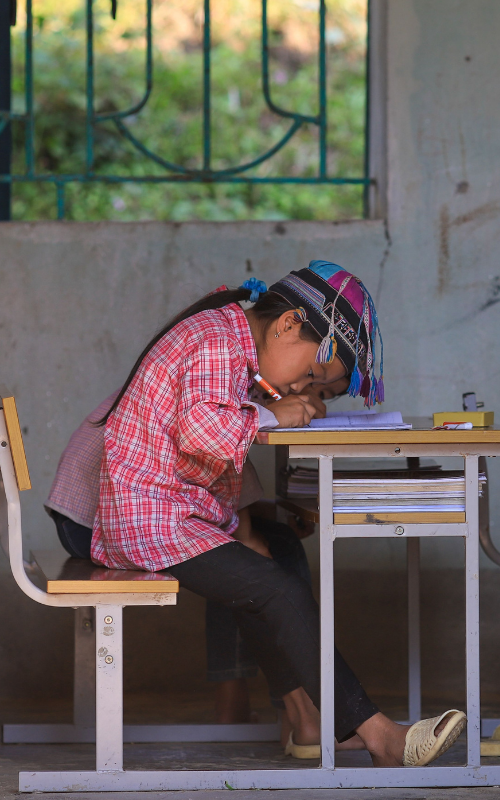
Photo from Pexels
To guarantee equal access to public services throughout all provinces, regardless of residency status, expenditure will also need to be increased in these rural regions.156 Increasing social service transfers to rural regions, simplifying the transfer system to focus on outcomes, and recentralizing social insurance could enhance equality, risk sharing, and labor mobility.157 As social expenditures continue to increase in these rural regions, there will be more equal levels of protection against potential risks and more equal access to public services, thereby aiding in the reduction of regional economic inequality.158