
Reproductive Health Inequities Among Incarcerated Women in the United States
Illustration courtesy of Canva, edited with ChatGPT (2026)

By Courtney Wright Ellsworth
Published Fall 2026
Special thanks to Ella Reynolds for editing and research contributions.
Viewpoints published by Ballard Brief are not necessarily endorsed by BYU or The Church of Jesus Christ of Latter-day Saints.
Summary+
Women constitute one of the fastest-growing demographics within the incarcerated population of the United States, yet many face challenges in receiving consistent, high-quality health care. Reproductive health is of particular concern, as most incarcerated women are of reproductive ageThe period in a woman’s life, typically between ages 15 and 49, during which she is capable of becoming pregnant.25 and require a variety of reproductive health care services. Despite these health needs, many incarcerated women experience inequities in access to menstrual hygiene products, prenatal care, and screening and treatment for reproductive conditions. These gaps stem from fragmented correctional policies, shortages of qualified providers, and financial barriers. Consequently, inadequate reproductive health care can contribute to preventable physical health problems, including untreated infections and pregnancy complications, as well as psychological distressA state of emotional and mental suffering characterized by anxiety, depression, and hopelessness.23 connected with traumaA response to an event or series of events involving physical or emotional harm, including violence, natural disasters, or serious injury, often disrupting a person’s sense of safety and stability.28 and loss of autonomy. Efforts to address reproductive health inequities among incarcerated women require meaningful policy reform, stronger enforcement of existing protections, and sustained advocacy, including by organizations such as RestoreHER.
Key Takeaways+
- More than 211,000 women are incarcerated in the United States. From 2000 to 2019, the incarcerated female population increased by approximately 33%, compared with a 22% increase among men.1
- Approximately 82% of incarcerated women are of reproductive age, defined as ages 15–49.2
- Federal standards for reproductive health care in correctional facilitiesInstitutions where people are incarcerated, including jails and prisons. Jails are run locally and hold people awaiting trial or serving short sentences, while prisons are state or federally run and house individuals serving longer sentences after conviction.10 are limited, leaving most policies to the states and resulting in wide variation in access to services such as menstrual products and prenatal care.3
- Thirty-one percent of jails lack on-site obstetric or gynecological services, and 50% of pregnant women in state prisons and 46% in federal prisons receive prenatal services from a qualified health care provider.4
- Women who use unsafe menstrual product substitutes are 2.8 times more likely than women using sanitary menstrual products to develop bacterial vaginosisA vaginal infection that occurs when healthy vaginal bacteria become imbalanced, leading to unusual discharge, odor, or discomfort.7 or urinary tract infectionsAn infection of the urinary system, usually caused by bacteria, that can lead to symptoms such as frequent and painful urination and lower abdominal discomfort.29, and have an increased risk of infertility-related complications.5
- Approximately 83% of surveyed perinatal nurses with experience caring for incarcerated patients reported that pregnant patients were shackled at least some of the time.6
Key Terms+
Bacterial vaginosis (BV)—A vaginal infection that occurs when healthy vaginal bacteria become imbalanced, leading to unusual discharge, odor, or discomfort.7
Contraceptives—Methods or devices used to prevent pregnancy, including pills, condoms, intrauterine devices (IUDs), implants, and patches.8
Copayments—Fixed out-of-pocket fees that patients are required to pay when accessing medical services.9
Correctional facilities—Institutions where people are incarcerated, including jails and prisons. Jails are run locally and hold people awaiting trial or serving short sentences, while prisons are state or federally run and house individuals serving longer sentences after conviction.10
First Step Act of 2018—A federal law in the United States designed to reform aspects of the criminal justice system, including limiting the use of restraints on pregnant incarcerated individuals and ensuring access to menstrual products free of charge.11
Gynecologic care—Medical care specializing in the female reproductive system, including the vagina, cervix, uterus, ovaries, fallopian tubes, and breasts.12
Medicaid—A United States health insurance program that provides free or low-cost medical coverage to individuals and families with limited income. It is jointly funded by the federal and state governments.13
Menstruation—A monthly process in which the lining of the uterus is shed. It is also referred to as a menstrual period.14
Miscarriage—The unexpected loss of a pregnancy before the twentieth week.15
Morbidity—The presence of a disease or medical condition, or the rate at which such conditions occur within a population.16
Obstetric care—Medical care provided during pregnancy, childbirth, and the postpartum period.17
Obstetrician-gynecologist (OB/GYN)—A physician who specializes in women’s reproductive health and provides care related to fertility, pregnancy, and related conditions.18
Out-of-pocket medical costs—Health care expenses that an individual must pay directly, rather than those covered by insurance or another program like gynecologic careMedical care specializing in the female reproductive system, including the vagina, cervix, uterus, ovaries, fallopian tubes, and breasts.12.19
Pelvic inflammatory disease (PID)—An infection of the female reproductive organs that can cause abdominal pain, unusual vaginal discharge, bleeding between periods, or fever and chills. Early treatment with antibiotics can prevent serious complications, including infertility.20
Post-traumatic stress disorder (PTSD)—A mental health condition that can develop after exposure to a traumatic event, with symptoms including flashbacks, nightmares, anxiety, and difficulty coping with daily life.21
Preterm birth—The birth of a baby before 37 completed weeks of pregnancy.22
Psychological distress—A state of emotional and mental suffering characterized by anxiety, depression, and hopelessness.23
Recidivism—The tendency of a formerly incarcerated individual to engage in criminal activity after release.24
Reproductive age—The period in a woman’s life, typically between ages 15 and 49, during which she is capable of becoming pregnant.25
Shackling—The practice of restraining individuals with handcuffs, leg irons, or belly chains during transport, labor, delivery, or the postpartum period.26
Sexually transmitted infection (STI)—An infection caused by bacteria, viruses, or parasites spread primarily through sexual contact and often associated with symptoms such as discharge, pain, sores, or itching. Early diagnosis and treatment help prevent complications and transmission.27
Trauma—A response to an event or series of events involving physical or emotional harm, including violence, natural disasters, or serious injury, often disrupting a person’s sense of safety and stability.28
Urinary tract infection (UTI)—An infection of the urinary system, usually caused by bacteria, that can lead to symptoms such as frequent and painful urination and lower abdominal discomfort.29
Context
Q: What is reproductive health?
A: Reproductive health refers to a woman’s overall physical, social, and emotional well-being as it relates to her reproductive system and its functions.30 Reproductive health encompasses every stage of life, from childhood through the reproductive years and menopause, and is an essential part of overall health and quality of life for women.31 The proper functioning of the female reproductive system, including the labia, clitoris, vagina, cervix, uterus, ovaries, and fallopian tubes, is an essential part of reproductive health.32 The regulation of hormones such as estrogen and progesterone is also central to reproductive health because these hormones influence biological processes including menstruationA monthly process in which the lining of the uterus is shed. It is also referred to as a menstrual period.14, fertility, and pregnancy.33
According to the American Medical Women’s Association, reproductive health is available when women have access to comprehensive education, culturally competent health care, and the social and economic resources needed to promote well-being.34 Comprehensive reproductive health includes access to menstrual products, contraception, prenatal and obstetric careMedical care provided during pregnancy, childbirth, and the postpartum period.17, safe childbirth services, education on safe sexual practices, and protections that safeguard bodily autonomy.35 Structural barriers—such as limited access to health care, economic insecurity, and systemic discrimination—often hinder women’s ability to access these resources. When these reproductive health needs are met, women are better able to make informed decisions about their bodies and reduce the risk of preventable health complications.36
Reproductive health also requires providers to address the psychological and emotional changes associated with reproductive processes and life events.37 Experiences such as menstruationA monthly process in which the lining of the uterus is shed. It is also referred to as a menstrual period.14, pregnancy, infertility, miscarriageThe unexpected loss of a pregnancy before the twentieth week.15, and menopause can significantly affect mental well-being.38 As a result, comprehensive reproductive health care includes routine mental health screenings, counseling, and appropriate treatment alongside physical care.39 Ultimately, reproductive health is most fully realized when biological, social, and emotional needs are supported in an integrated and continuous manner across all stages of life.
Q: What are the major trends and characteristics of the female incarcerated population in the United States?
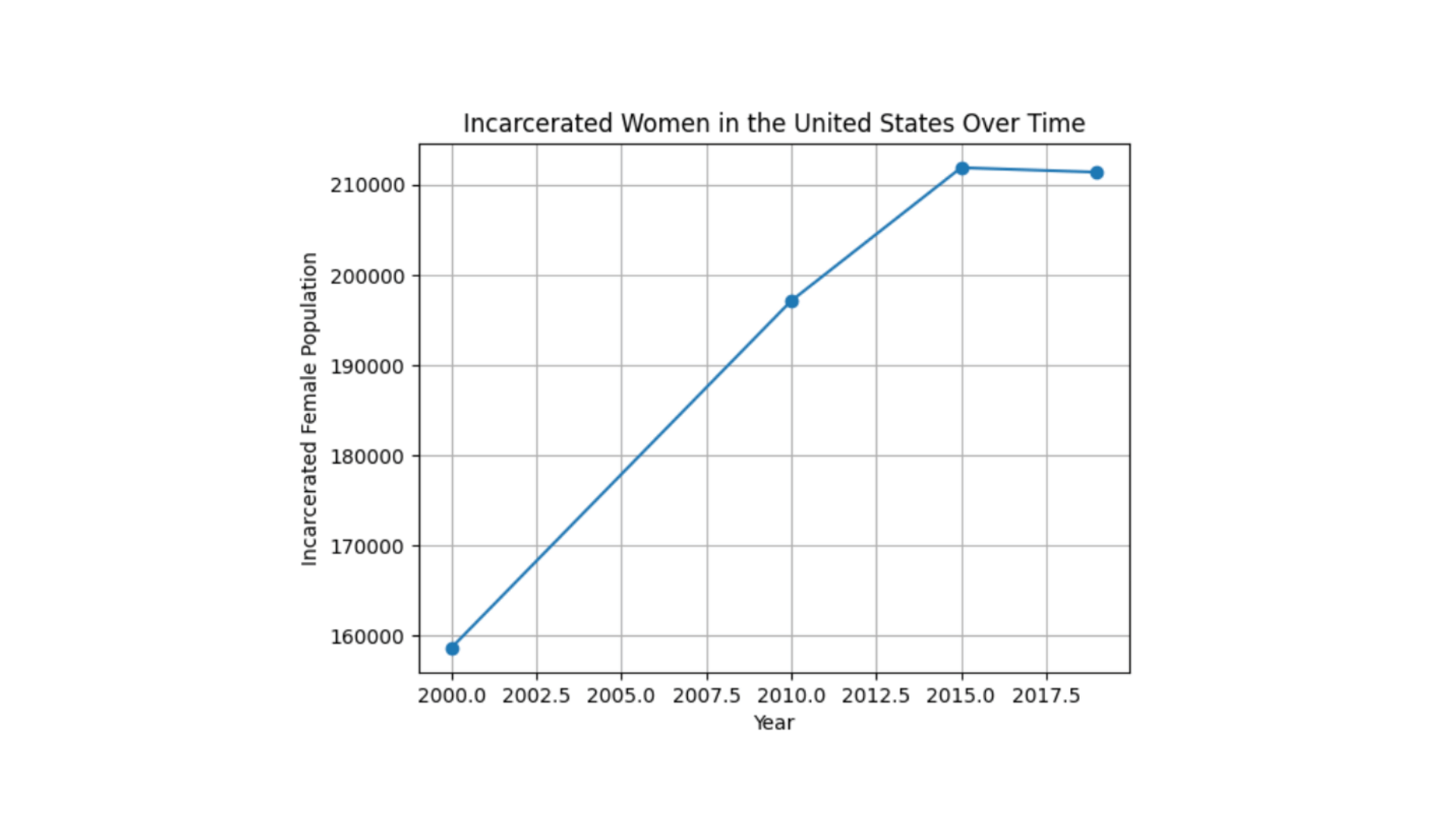
A: The incarcerated population includes individuals confined in jails, prisons, and other overnight correctional facilitiesInstitutions where people are incarcerated, including jails and prisons. Jails are run locally and hold people awaiting trial or serving short sentences, while prisons are state or federally run and house individuals serving longer sentences after conviction.10.40 Although men comprise most of the US incarcerated population, the number of incarcerated women has increased dramatically since 1980.41 From 2000 to 2019, the incarcerated female population increased by approximately 33%, compared with a 22% increase among men.42
Women in state prisons are also more likely than men to be incarcerated for nonviolent offenses.43 In 2021, 54% of women in state prisons were serving sentences for nonviolent offenses, compared with 36% of men.44 In 2024, nearly 73% of federally sentenced women were convicted of drug trafficking, immigration violations, or fraud.45 Drug-related offenses alone accounted for more than 25% of the sentences served by women.46 These offense patterns shape women’s pathways into the criminal justice system and contribute to their experiences while incarcerated.
Racial and ethnic disparities are reflected in the demographics of incarcerated women.47 As of 2023, approximately 75% of incarcerated women identified as members of racial or ethnic minority groups.48 Disparities are particularly pronounced among American Indian and Alaska Native women, whose incarceration rates are 5.5 times higher than those of Latina women, 3.7 times higher than those of White women, and 2.2 times higher than those of Black women.49 Researchers often link these racial and ethnic disparities to broader structural inequalities, including poverty, limited educational and employment opportunities, and greater exposure to criminal justice surveillance.50 Such structural inequities contribute to the broader disparities experienced by women in the criminal justice system.
Family caretaking responsibilities further distinguish incarcerated women from the broader incarcerated population.51 Almost half of women in federal prisons (48%) and more than half in state prisons (55%) report having children.52 Among these mothers, nearly six in ten have children under the age of 18.53 From 1991 to 2007, the number of children with a mother in prison increased by 131%.54
Altogether, these trends show that incarcerated women in the United States represent a distinct and rapidly growing population characterized by nonviolent offense patterns, racial and ethnic disparities, and significant family caretaking responsibilities.
Q: Who is responsible for providing and overseeing health care for incarcerated women?
A: Correctional facilitiesInstitutions where people are incarcerated, including jails and prisons. Jails are run locally and hold people awaiting trial or serving short sentences, while prisons are state or federally run and house individuals serving longer sentences after conviction.10 are responsible for providing health care to incarcerated women under the supervision of federal, state, and local government authorities. In federal prisons, health care services are administered by the Federal Bureau of Prisons.55 In state prisons and local jails, responsibility typically falls to state departments of corrections or local jail administrations.56 These entities establish health care policies, oversee service delivery, and ensure access to necessary medical and mental health care.
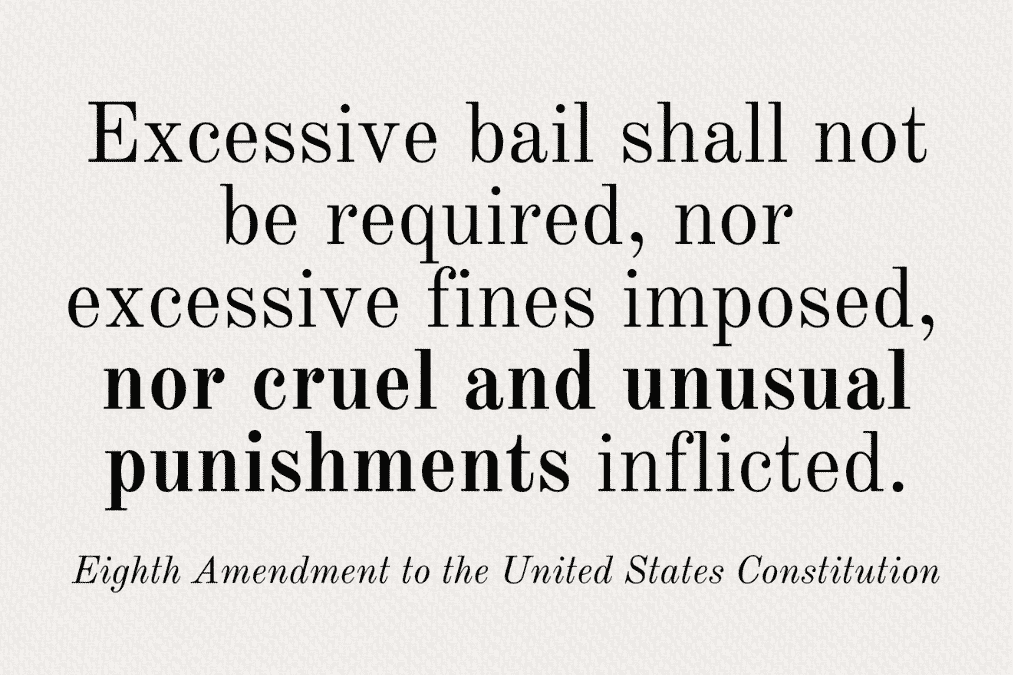
The Eighth Amendment prohibits cruel and unusual punishment and has been interpreted to require correctional facilities to provide adequate health care to incarcerated individuals.57 In Estelle v. Gamble (1976), the Supreme Court ruled that deliberate indifference to an incarcerated person’s serious medical needs violates the Eighth Amendment, establishing a constitutional right to adequate medical care.58 The Eighth Amendment protects people serving sentences from deliberate indifference to serious medical needs, while pretrial detainees receive related protections under the Fourteenth Amendment. The Court later reaffirmed this responsibility in West v. Atkins (1988), holding that correctional authorities remain accountable for health care even when services are provided by contracted private medical providers.59 These decisions make health care a legal obligation of correctional systems rather than a discretionary service.60
Created by author using Canva (2026)
Health care is usually delivered within correctional facilities, including local jails and state or federal prisons.61 Prisons and jails must provide access to necessary medical care, whether through on-site services or outside providers.62 Specialty services, such as emergency treatment or surgery, are commonly provided through contracts with hospitals or private medical providers.63 Incarcerated individuals generally access care by submitting formal requests that must be approved by correctional staff.64 Although correctional authorities are legally required to provide health care, these protections do not guarantee consistent access to timely, comprehensive, or high-quality services.65 As a result, many incarcerated women continue to face barriers to obtaining necessary health care.66
Q: What reproductive health inequities do incarcerated women face?
A: To understand reproductive health inequities among incarcerated women, it is necessary to begin by examining the gaps in care within correctional settings. Although correctional facilitiesInstitutions where people are incarcerated, including jails and prisons. Jails are run locally and hold people awaiting trial or serving short sentences, while prisons are state or federally run and house individuals serving longer sentences after conviction.10 are required to provide health care comparable to that available to the general population, access to reproductive health care varies widely across states and facilities.67 Approximately 82% of incarcerated women are of reproductive ageThe period in a woman’s life, typically between ages 15 and 49, during which she is capable of becoming pregnant.25, defined by the World Health Organization as ages 15 to 49, increasing the need for menstrual products, contraception, prenatal care, and other reproductive health services.68 Despite these needs, many facilities provide these services inconsistently or inadequately, often falling short of professional recommendations and accepted standards of care.69
One of the most common reproductive health inequities faced by incarcerated women is limited access to menstrual products.70 Because menstruationA monthly process in which the lining of the uterus is shed. It is also referred to as a menstrual period.14 is a routine process for women of reproductive ageThe period in a woman’s life, typically between ages 15 and 49, during which she is capable of becoming pregnant.25, correctional facilities are expected to provide an adequate supply of menstrual products.71
Another major inequity is access to comprehensive prenatal and obstetric careMedical care provided during pregnancy, childbirth, and the postpartum period.17.72 Prenatal care is one of the most common preventive health services in the United States and is typically provided by an OB/GYN, family medicine physician, or certified midwife.73 When pregnant women do not receive adequate prenatal care, they are at a higher risk for adverse infant outcomes: their infants are three times more likely to have low birth weight and five times more likely to die.74 In 2023, approximately 88% of newly admitted women received a pregnancy test, with about 2% testing positive, representing an estimated 300–400 pregnant individuals identified at intake.75 During the same year, correctional facilitiesInstitutions where people are incarcerated, including jails and prisons. Jails are run locally and hold people awaiting trial or serving short sentences, while prisons are state or federally run and house individuals serving longer sentences after conviction.10 reported 665 live births, 47 miscarriagesThe unexpected loss of a pregnancy before the twentieth week.15s, and 15 abortions.76 These figures include pregnancies with outcomes during incarceration, excluding women released before giving birth. Access to prenatal services is particularly critical for this demographic as incarcerated women often face elevated medical and social risk factors, including housing insecurity, poor nutrition, substance use disorders, and limited social support, all of which increase the likelihood of complications such as preterm birthThe birth of a baby before 37 completed weeks of pregnancy.22, low birth weight, and prenatal drug or alcohol exposure.77 Although pregnant individuals require routine prenatal care, preventive screenings, nutrition counseling, and labor and delivery support, access to these services varies across facilities.78 Approximately half of pregnant women in state and federal prisons receive prenatal services from qualified health care providers, demonstrating persistent inequities in maternal health care.79
Incarcerated women also experience high rates of STIs, including chlamydia and gonorrhea.80 A longitudinal study covering 2007–2017 found that women in correctional facilitiesInstitutions where people are incarcerated, including jails and prisons. Jails are run locally and hold people awaiting trial or serving short sentences, while prisons are state or federally run and house individuals serving longer sentences after conviction.10 experienced STIs at a rate of 3.7 per 100 person-years (a measure of new cases among 100 people over one year), compared with 1.9 per 100 person-years among women outside the criminal justice system.81 Despite this elevated risk, screening, treatment, and follow-up remain inconsistent.82 In one jail screening program, 56%–58% of chlamydia and gonorrhea cases received treatment, with a median treatment delay of eight days.83 These gaps leave many infections untreated and increase the risk of long-term reproductive health complications. Altogether, these examples highlight several of the reproductive health inequities faced by incarcerated women.
Contributing Factors
Policy Fragmentation in Correctional Reproductive Health Care
In the US criminal justice system, federal, state, and local authorities establish policies governing confinement conditions.84 Although constitutional law requires correctional systems to provide medical care, it does not provide specific standards for reproductive health in those facilities.85 As a result, state and local jurisdictions have authority over which reproductive health services are provided, how they are delivered, and the conditions under which incarcerated women can access care.86 This decentralized approach creates fragmented policies and enforcement across jurisdictions, causing health care administration to vary even when formal policies exist.87
Although health care policies and standards exist for correctional facilitiesInstitutions where people are incarcerated, including jails and prisons. Jails are run locally and hold people awaiting trial or serving short sentences, while prisons are state or federally run and house individuals serving longer sentences after conviction.10, oversight and enforcement remain limited.88 Unlike hospitals and community health care providers, prisons and jails are not required to obtain accreditation for their health care services, allowing them to operate without outside assessment.89 Because accreditation is voluntary and requires time and financial resources, a 2025 study found that fewer than one in five US jails pursue accreditation.90 When violations occur, the US Department of Justice typically responds through legal action or government investigations. However, such interventions often occur only after significant harm or prolonged legal disputes.91 As a result, the absence of consistent enforcement and accountability leads to inequitable reproductive health care.92
This decentralized regulation of health care means reproductive health care is often tailored to align with established contracting practices and budget priorities.93 Some states provide services through their departments of corrections, whereas others rely on private medical contractors or partnerships with local health care providers.94 In Texas, for instance, the Texas Department of Criminal Justice delivers health care through the Correctional Managed Health Care Committee, a partnership with the University of Texas Medical Branch and Texas Tech University Health Sciences Center that provides health care across the state’s prison system.95 Differences in policy and health care delivery contribute to substantial variation in the availability and consistency of reproductive health care for incarcerated women across the United States.
An example of inconsistent reproductive health policy implementation is access to menstrual hygiene products. Menstrual cycles vary in duration and intensity, and most women require approximately three to six tampons or pads per day during active bleeding.96 However, access to these products in correctional settings often falls short of this need. A cross-sectional survey of incarcerated women across the United States found that approximately 54% received fewer than five menstrual hygiene products during the intake process, an amount that may not meet even a single day’s needs.97
The First Step Act of 2018A federal law in the United States designed to reform aspects of the criminal justice system, including limiting the use of restraints on pregnant incarcerated individuals and ensuring access to menstrual products free of charge.11 sought to address disparities in access to menstrual hygiene products, though its implementation has been inconsistent across federal facilities.98 The Act requires that incarcerated individuals receive menstrual hygiene products, including tampons, pads, and panty liners, at no cost.99 However, as of 2024, a study of 29 federal institutions revealed that approximately one in five still required payment for menstrual products; two facilities did not provide all product types; one did not keep products in a common area; and several did not consistently restock supplies within 24 hours of notification.100 Additionally, the First Step Act applies only to federally operated prisons, which house approximately 9% of incarcerated women, leaving the majority dependent on state and local policies.101
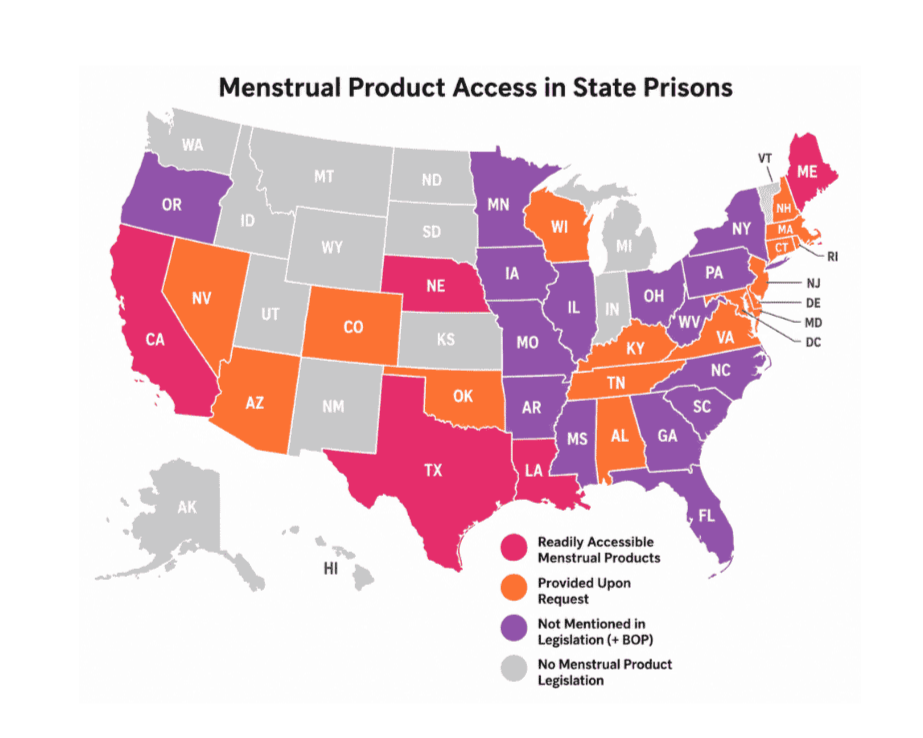
At the state level, access to menstrual products also remains uneven. As of fall 2025, 35 states have passed legislation requiring correctional facilitiesInstitutions where people are incarcerated, including jails and prisons. Jails are run locally and hold people awaiting trial or serving short sentences, while prisons are state or federally run and house individuals serving longer sentences after conviction.10 to provide menstrual hygiene products, yet the scope and quality of products vary widely.102 For example, only 28 states require correctional facilities to provide menstrual products free of charge. Five states (California, Louisiana, Maine, Nebraska, and Texas) require those products to be readily accessible, while 12 provide them only “upon request.”103 Additionally, 24 states explicitly mention pads and tampons while 11 do not specify the types of products provided. Fifteen states also establish specific quantity requirements, while the remaining states base availability on health care needs.104 Implementation of state-mandated policies is likewise inconsistent. Although New York was the first to legally require free menstrual products in prisons and jails, more than half of incarcerated women in the state nonetheless report limited or costly access.105 Missouri also has a policy requiring free provision of feminine hygiene products, yet 63% of women surveyed in 2021 reported having to trade food, soap, shampoo, or personal favors for basic products.106 These practices in New York, Missouri, and other states compromise hygiene and health, exposing significant gaps in reproductive health care policies and implementation across the US correctional system.107 Inconsistencies and ambiguities between federal, state, and local facilities leave incarcerated women’s access to basic reproductive health services uneven and inequitable.108
Limited Access to Qualified Reproductive Health Care Providers
Correctional facilitiesInstitutions where people are incarcerated, including jails and prisons. Jails are run locally and hold people awaiting trial or serving short sentences, while prisons are state or federally run and house individuals serving longer sentences after conviction.10 frequently lack adequate access to qualified reproductive health care providers, limiting incarcerated women’s ability to receive timely and comprehensive medical care.109 Adequate access requires licensed clinicians with specialized training, such as primary care providers and obstetrician-gynecologist (OB/GYNs)A physician who specializes in women’s reproductive health and provides care related to fertility, pregnancy, and related conditions.18, who can address a full range of reproductive health needs, including gynecologic careMedical care specializing in the female reproductive system, including the vagina, cervix, uterus, ovaries, fallopian tubes, and breasts.12, contraceptive counseling, prenatal care, and STI screening.110 However, health care staffing in US prisons and jails varies depending on funding, facility size, administrative structure, and population turnover.111 These variations determine whether qualified reproductive health care providers are present and how services are organized, directly contributing to inequities in reproductive health outcomes.112
For example, a 2022 study examining staffing availability in small- to medium-sized jails (defined as those with fewer than 250 residents) in the Southeastern US found that these smaller facilities often only have a medical provider on-site one day per week or less, with nurses available 20–40 hours per week.113 This limited coverage makes it difficult to provide preventive care, STI testing, or gynecologic evaluations consistently, allowing existing conditions to worsen and preventable issues to progress.
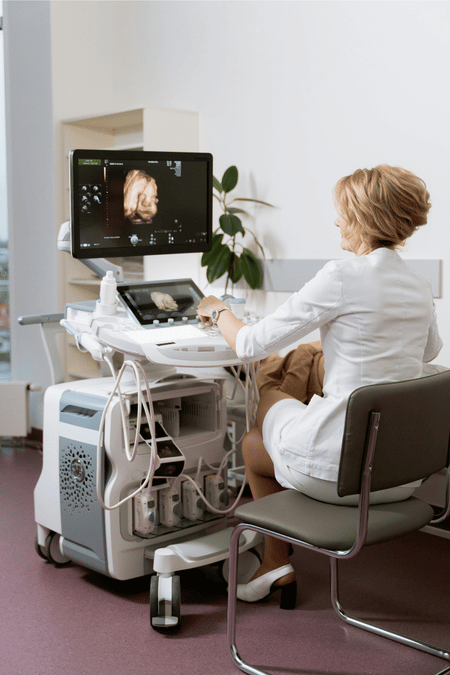
Photo by Pexels
Larger facilities typically maintain more consistent coverage, with providers on-site three to seven days per week and nursing staff available 24 hours per day, yet significant gaps in specialized reproductive care remain.114 Many facilities do not employ on-site OB/GYNs or clinicians with advanced training in reproductive health. For example, a 2017 survey of 52 facilities across 40 states found that 31% did not have any on-site obstetric and gynecological care.115 Additional research revealed that 50% of surveyed correctional health care providers felt comfortable counseling incarcerated women about oral contraceptivesMethods or devices used to prevent pregnancy, including pills, condoms, intrauterine devices (IUDs), implants, and patches.8 , and 84% reported needing additional education on contraceptive care.116 Due to this lack of specialized care, comprehensive evaluations and treatment for reproductive health conditions may be delayed, limited, or require off-site referrals.117 Mental health professionals—essential for supporting reproductive health care through management of traumaA response to an event or series of events involving physical or emotional harm, including violence, natural disasters, or serious injury, often disrupting a person’s sense of safety and stability.28, pregnancy-related stress, or counseling—are also frequently unavailable on-site.118 About 9% of jails have an on-site psychiatric provider, and roughly 26% have other mental health personnel physically present, meaning most facilities rely on off-site consultations or infrequent visits.119 The limited availability of reproductive health care specialists further restricts incarcerated women’s access to integrated and comprehensive health care that fully meets their multifaceted needs.120
These staffing limitations, gaps in specialized training, and logistical barriers directly contribute to inadequate prenatal care—a critical preventive health service. In 2023, over 2% of women in federal and state prisons across 47 jurisdictions tested positive for pregnancy at admission.121 Despite the demonstrated need, according to a survey conducted by the Bureau of Justice Statistics in 2016, 46% of pregnant women in federal facilities and 50% in state prisons receive some form of prenatal care from qualified providers during incarceration.122 The survey defined prenatal services broadly, ranging from dietary and exercise guidance to medication and specialized testing.123 Among incarcerated pregnant women who received prenatal care, 33% did not begin care until the second or third trimester because of financial barriers and inconsistent access to providers.124 Delayed prenatal care reduced opportunities for early intervention.125 Additionally, more than 30% of pregnant incarcerated women receive inadequate prenatal care, as measured by the timing of the first prenatal visit, the total number of visits, and the availability of recommended health screenings.126 These gaps in care are strongly linked to the shortage of qualified providers. When OB/GYNs or clinicians with specialized training are absent or available only intermittently, pregnant incarcerated women are less likely to receive infant-care education, dietary guidance, exercise recommendations, and ultrasounds.127
Out-of-Pocket Medical Costs
Out-of-pocket medical costsHealth care expenses that an individual must pay directly, rather than those covered by insurance or another program like gynecologic care.19 within correctional facilities create a significant barrier to reproductive health care for incarcerated women.128 Evidence shows that out-of-pocket medical costs directly deter incarcerated women from seeking care.129 In a study conducted in two state prisons, 64% of the 95 women surveyed reported forgoing medical treatment in the previous three months because they could not afford a $5 copayment.130 Additionally, qualitative responses indicated that women were more likely than men to identify the cost of seeing a medical professional as their primary financial stressor within the criminal justice system, rather than court fees.131
Approximately 40 state prison systems and the Federal Bureau of Prisons charge incarcerated individuals medical copayments for visits with health care providers.132 These copayments typically range from $2.00 to $5.00 per medical visit, frequently exceeding what incarcerated individuals can realistically afford.133 At typical prison wage rates, a single copayment may require several days of labor to pay.134 Incarcerated individuals must also use their limited earnings to cover other essential expenses, such as additional food and communication with family and friends.
Correctional labor pay differs across states and facilities, posing a significant financial barrier to incarcerated individuals, particularly in health care settings where out-of-pocket costs are prevalent.135 As of 2022, nine states reported a minimum wage of $0.00 per hour for incarcerated workers, meaning individuals may be required to work without any paid compensation.136 In several of these states (Texas, Arkansas, Mississippi, Alabama, Georgia, Florida, and South Carolina), incarcerated individuals cannot earn income to offset medical copaymentsFixed out-of-pocket fees that patients are required to pay when accessing medical services.9.137 Even in states that provide wages, incarcerated workers typically earn between $0.13 and $0.52 per hour, resulting in average daily earnings of approximately $0.86 to $3.45.138 Additionally, correctional facilitiesInstitutions where people are incarcerated, including jails and prisons. Jails are run locally and hold people awaiting trial or serving short sentences, while prisons are state or federally run and house individuals serving longer sentences after conviction.10Institutions where people are incarcerated, including jails and prisons. Jails are run locally and hold people awaiting trial or serving short sentences, while prisons are state or federally run and house individuals serving longer sentences after conviction.10 often withhold up to 80% of incarcerated individuals’ wages to cover institutional costs such as housing, meals, or court-related expenses.139 After these deductions, incarcerated individuals are frequently left with very little income available to meet basic personal needs, including health care expenses.
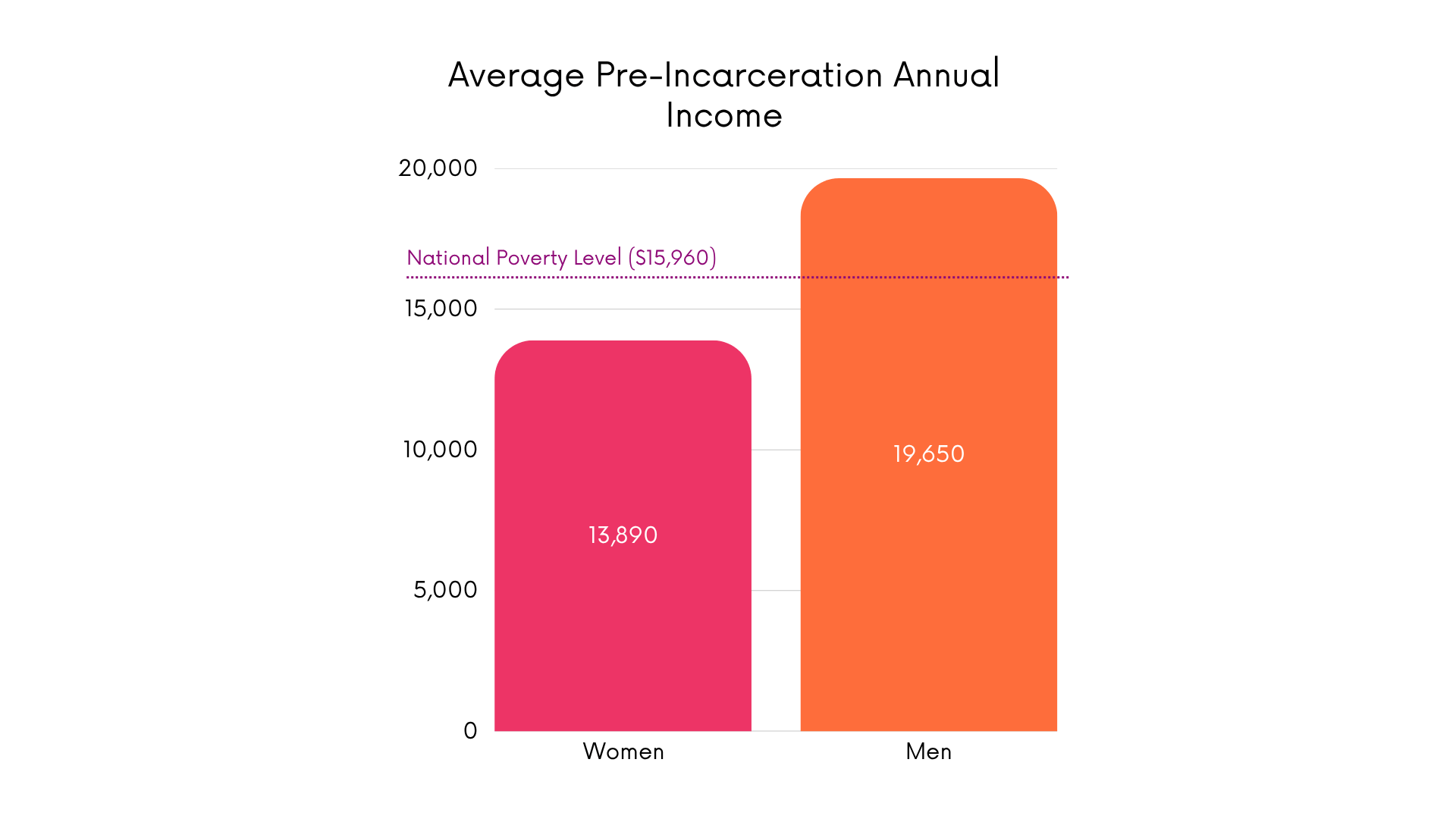
Many women begin incarceration with both substantial health needs and limited financial resources. Incarcerated women’s average annual income before incarceration is $13,890, approximately $5,760 less than incarcerated men’s average income of $19,650 and $2,070 below the national poverty level.140 Additionally, nearly two-thirds of incarcerated women enter custody without prior health insurance coverage. Women entering incarceration are also more likely than men to have preexisting and ongoing physical and mental health conditions, with approximately 53% of incarcerated women reporting at least one health condition compared to 37% of men.141 Consequently, incarcerated women rely on correctional health care more frequently and seek medical care at nearly twice the rate of their male counterparts.142 When facilities impose copaymentsFixed out-of-pocket fees that patients are required to pay when accessing medical services.9 for each visit, the cumulative financial burden increases rapidly, particularly for women managing ongoing reproductive health needs.143
Federal MedicaidA United States health insurance program that provides free or low-cost medical coverage to individuals and families with limited income. It is jointly funded by the federal and state governments.13 policy further limits the funding available for incarcerated women’s health care. Under the Federal Medicaid Inmate Exclusion Policy, federal Medicaid funds generally cannot be used for most services provided during incarceration, even though an estimated 80%–90% of incarcerated individuals would otherwise qualify for Medicaid.144 The Federal Bureau of Prisons states that, in theory, medical copaymentsFixed out-of-pocket fees that patients are required to pay when accessing medical services.9 are intended to encourage appropriate use of health care services and promote personal responsibility in health care decision-making.145 In practice, however, many incarcerated individuals lack the financial means to afford necessary medical care, reinforcing the barriers created by copayment requirements.
An example of how out-of-pocket medical costsHealth care expenses that an individual must pay directly, rather than those covered by insurance or another program like gynecologic care.19 contribute to reproductive health inequities among incarcerated women in the United States is the management of STIs, including chlamydia, gonorrhea, syphilis, and human immunodeficiency virus (HIV).146 Timely screening, diagnosis, and treatment are essential in preventing serious complications such as out-of-pocket medical costsHealth care expenses that an individual must pay directly, rather than those covered by insurance or another program like gynecologic care.19 and infertility.147 This need is particularly urgent because STI rates among incarcerated women are significantly higher than in the general population: between 6% and 9% test positive for gonorrhea, and 11% to 22% for chlamydia, nearly twice the rates observed outside correctional settings.148
Despite the importance of routine screening and early detection, seven states (Alabama, Arizona, Florida, Hawaii, Iowa, Massachusetts, and Michigan) require incarcerated women to pay between $3.00 and $5.00 per STI screening.149 In a system where incarcerated workers earn only $0.13 to $0.52 per hour, this cost can equal nearly six times a woman’s daily earnings, or substantially more when wage deductions and account balances are taken into account.150 Because STI care may require multiple visits, repeated copaymentsFixed out-of-pocket fees that patients are required to pay when accessing medical services.9 can discourage timely treatment and allow infections to remain untreated.
Consequences
Physical Harm and Preventable Medical Complications
Delays, restrictions, or denials of care prevent early detection and treatment, allowing otherwise manageable conditions, including pregnancy-related complications, menstrual disorders, and STIs, to progress into medical emergencies.151 As these untreated conditions worsen, they lead to long-term reproductive damage, increased maternal morbidityThe presence of a disease or medical condition, or the rate at which such conditions occur within a population.16, and lasting health consequences.152
One of the most significant consequences of reproductive health inequities among incarcerated women is worsened maternal and infant outcomes. While pregnancies in community settings are generally managed through routine monitoring and coordinated care, access in correctional settings is often delayed, disrupted, or denied.153 For example, a 2025 study of 28 correctional facilitiesInstitutions where people are incarcerated, including jails and prisons. Jails are run locally and hold people awaiting trial or serving short sentences, while prisons are state or federally run and house individuals serving longer sentences after conviction.10 found that 55% of the 22 prisons provided routine, timely prenatal care through on-site and off-site services. Among the six jails surveyed, 67% provided such care.154 Within pregnant populations, inadequate prenatal care is strongly associated with preterm delivery, with women receiving insufficient care facing approximately 2.1 to 2.9 times higher risk compared to those receiving adequate prenatal care.155 When pregnant incarcerated women lack consistent prenatal services, conditions such as hypertension, infections, and substance use disorders worsen, further increasing the likelihood of preterm birthThe birth of a baby before 37 completed weeks of pregnancy.22.156 Consequently, infants born to incarcerated women experience preterm birth at a rate 44% higher than that among infants in the general population (13% compared with 9%).157
The physical harms associated with preterm birthThe birth of a baby before 37 completed weeks of pregnancy.22 are severe and often life-threatening for both infants and mothers.158 Incarcerated women and their infants face elevated risks of complications associated with preterm birth, and in some correctional settings, the incidence of preterm birth exceeds three times the rate observed in the general population.159 Infants born prematurely face elevated risks of respiratory distress syndrome, gastrointestinal immaturity leading to poor feeding, motor delays, heart failure, and ischemic heart disease.160 In addition, preterm birth and low birth weight account for approximately 14% of infant deaths.161 Early preterm delivery also significantly increases maternal morbidityThe presence of a disease or medical condition, or the rate at which such conditions occur within a population.16, including infection, placental abruption, hemorrhage, blood transfusion, and hospitalization.162 When incarcerated women lack consistent access to timely and comprehensive prenatal care, these maternal and infant complications become more likely, demonstrating that reproductive health inequities are associated with severe physical harm, including some complications that timely and comprehensive care may help prevent.
Created by author using ChatGPT (2026)
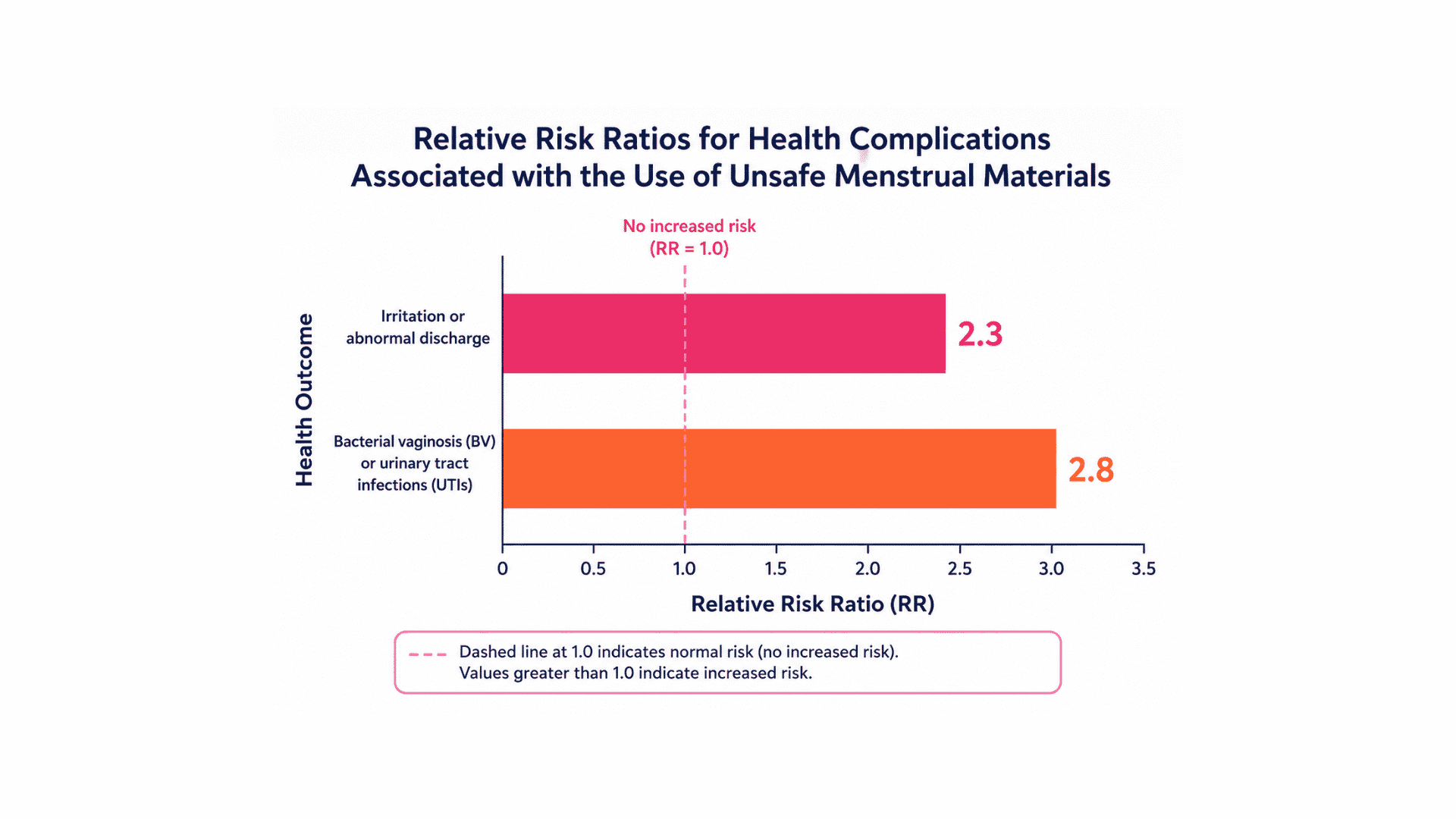
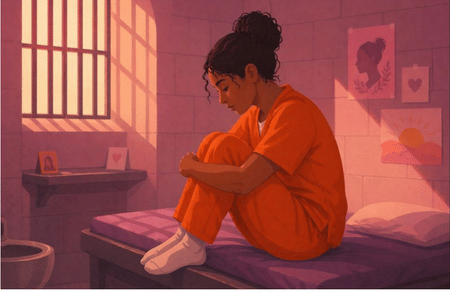
Another direct consequence of reproductive health inequities among incarcerated women in the United States is the risk of physical harm from inadequate access to menstrual hygiene products. When correctional facilitiesInstitutions where people are incarcerated, including jails and prisons. Jails are run locally and hold people awaiting trial or serving short sentences, while prisons are state or federally run and house individuals serving longer sentences after conviction.10 fail to provide sufficient sanitary supplies, women are forced to rely on improvised materials such as toilet paper, socks, or pieces of bedding.163 These materials are neither sterile nor appropriate for prolonged use, creating conditions that may increase the risk of infection.164 Urinary tract infectionsAn infection of the urinary system, usually caused by bacteria, that can lead to symptoms such as frequent and painful urination and lower abdominal discomfort.29 are a documented concern among incarcerated women. In a study of 307 incarcerated women, 14% reported recurrent UTIs and 13% reported painful urination.165 Separate research examining menstrual practices showed that individuals who rely on unsafe menstrual materials are 2.3 times more likely to report symptoms such as irritation or discharge, and 2.8 times more likely to develop bacterial vaginosisA vaginal infection that occurs when healthy vaginal bacteria become imbalanced, leading to unusual discharge, odor, or discomfort.7 (BV) or UTIs.166
BV and UTIs are preventable and treatable infections, yet when access to adequate hygiene resources and timely medical care is denied, these infections can progress into severe and irreversible health consequences. BV increases susceptibility to human immunodeficiency virus (HIV), raises the risk of preterm birthThe birth of a baby before 37 completed weeks of pregnancy.22
The prevalence of infection among incarcerated women illustrates the importance of adequate reproductive health care. Recent national data on BV and UTI prevalence among incarcerated women in the United States are limited; however, international studies provide some insight into the occurrence of such infections in correctional settings. In New Zealand, 39% of incarcerated women tested positive for BV, compared with an estimated global prevalence of 29% among reproductive-age women.171 UTIs have also been reported at 19% among incarcerated populations in Brazil.172 Although differences in study populations and methods prevent direct comparisons, the findings demonstrate the importance of timely diagnosis and treatment of infections in correctional settings.
Denial of equitable access to prenatal care, menstrual hygiene products, and timely medical treatment allows otherwise manageable conditions to escalate into severe complications, including preterm birth, infertility, chronic infection, and adverse infant outcomes.173
Psychological Harm
Incarcerated women have high rates of preexisting mental health conditions that may increase their vulnerability to psychological harm when reproductive care restricts bodily autonomy or retraumatizes patients.
Incarcerated women experience mental health disorders at rates approximately five times higher than women in the general population worldwide.174 Compared with women outside correctional settings, incarcerated women have higher rates of personality disorders (55% vs. 12%), anxiety disorders (36% vs. 7%), mood disorders (25% vs. 5%), and post-traumatic stress disorder (PTSD)A mental health condition that can develop after exposure to a traumatic event, with symptoms including flashbacks, nightmares, anxiety, and difficulty coping with daily life.21 (16% vs. 2%).175 This burden is closely linked to widespread histories of traumaA response to an event or series of events involving physical or emotional harm, including violence, natural disasters, or serious injury, often disrupting a person’s sense of safety and stability.29; a report from the Women’s Prison Association found that 91% of formerly incarcerated women have experienced trauma, more than half screen positive for anxiety, PTSD, or depression, and many had not received behavioral health care before incarceration.176
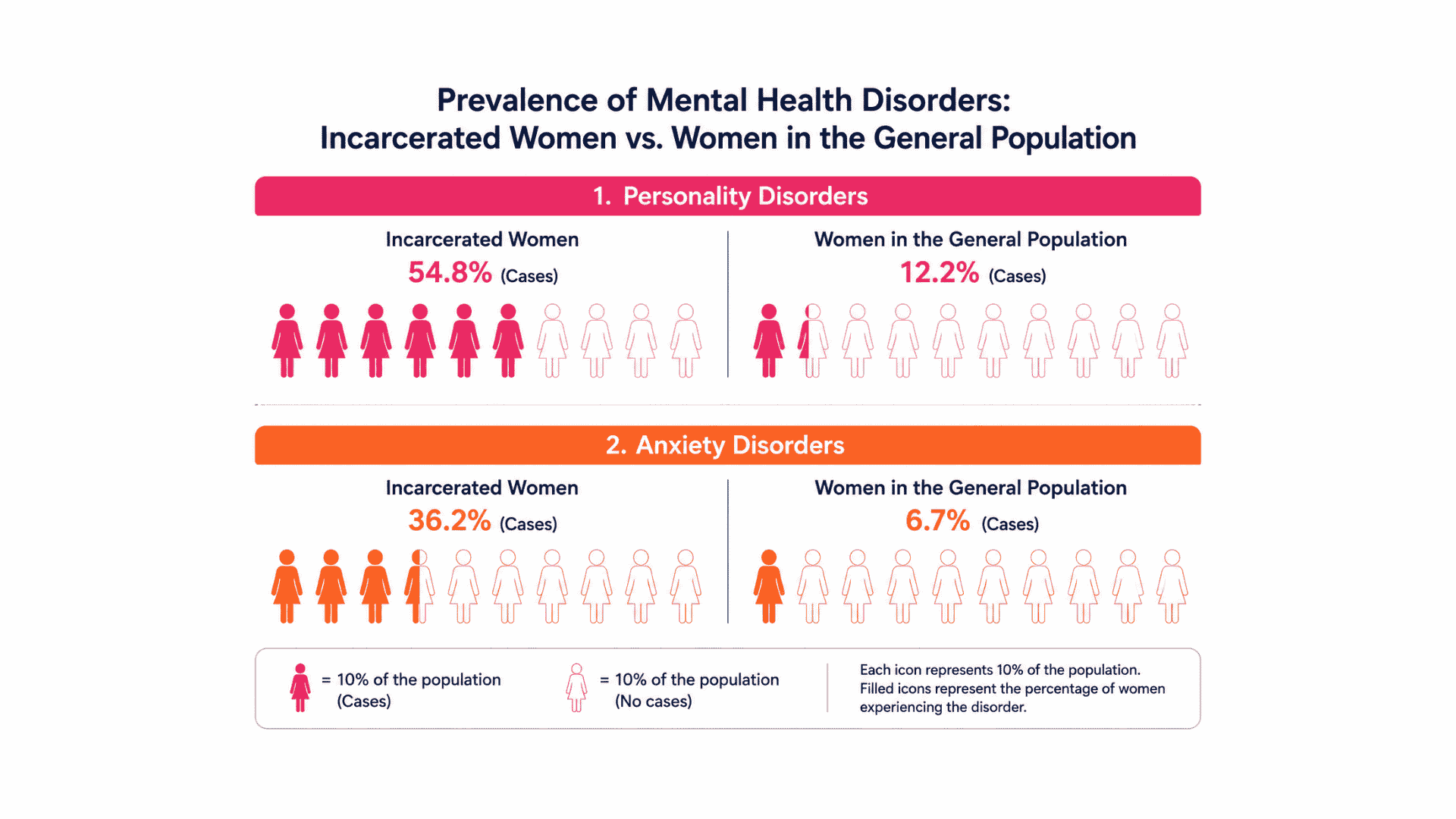
This disproportionate mental health burden is also evident when incarcerated women are compared to incarcerated men.177 Data from the United States Department of Justice indicate that 32% of incarcerated women experienced serious psychological distressA state of emotional and mental suffering characterized by anxiety, depression, and hopelessness.23 in the past 30 days before the survey, compared with 26% of incarcerated men.178 In jails, 20% of women reported serious distress, compared with 14% of men.179 Across racial and ethnic groups, women also have higher rates of mental health diagnoses and experience PTSD at approximately twice the rate of their male counterparts.180 Such high rates of traumaA response to an event or series of events involving physical or emotional harm, including violence, natural disasters, or serious injury, often disrupting a person’s sense of safety and stability.28 and mental illness make incarcerated women particularly vulnerable to reproductive health practices that restrict bodily autonomy or recreate conditions associated with previous trauma.

Photo by Pexels
ShacklingThe practice of restraining individuals with handcuffs, leg irons, or belly chains during transport, labor, delivery, or the postpartum period.26 during childbirth provides one documented example. Shackling involves the use of restraints, including handcuffs, leg irons, or belly chains, during transport, labor, delivery, and the postpartum period.181 Although restraints are often justified for security reasons, 10% of nurses in a national survey reported ever feeling unsafe while caring for an incarcerated pregnant patient.182 Before the 1990s, restraints were regularly used regardless of a woman’s history of violence or escape attempts, generating increased advocacy after a 1999 Amnesty International report concluded the practice was medically dangerous and ethically unacceptable.183 In 2000, Illinois became the first state to restrict shackling of pregnant incarcerated women, and professional organizations, such as the American College of Obstetricians and Gynecologists, have since formally opposed shackling.184 Despite these reforms, shackling persists. As of June 2025, eight states (Michigan, Wisconsin, Iowa, Kansas, North Dakota, South Dakota, Wyoming, and Alaska) still lack anti-shackling laws, and enforcement remains inconsistent where laws exist.185 In a national sample, 74% of perinatal nurses reported caring for incarcerated pregnant or postpartum patients; among them, 83% said patients were shackled at least some of the time.186 Only 17% were familiar with professional guidelines opposing restraints during labor, and just 7% could correctly identify their state’s shackling laws.187 These findings show that gaps between policy and practice allow shackling to continue despite legal and professional opposition.
The continued use of shacklingThe practice of restraining individuals with handcuffs, leg irons, or belly chains during transport, labor, delivery, or the postpartum period.26 during childbirth can produce significant psychological consequences by restricting movement during labor and delivery. Childbirth is a vulnerable experience that requires mobility, autonomy, and trust in medical providers to reduce the risk of traumaA response to an event or series of events involving physical or emotional harm, including violence, natural disasters, or serious injury, often disrupting a person’s sense of safety and stability.28.188 By restricting movement, shackling limits effective pain-coping strategies and creates a profound loss of control.189 Loss of control during childbirth is one of the strongest predictors of traumatic birth experiences and subsequent PTSD.190 Women who have been shackled during labor report depression, humiliation, emotional distress, and trauma.191 In one Indiana study, 58% of incarcerated women who gave birth during their sentence attributed negative emotions directly to childbirth restraints, describing the experience as excessive and dehumanizing.192 For women with prior histories of sexual violence, estimated at 56% to 82% of incarcerated women, the inability to move freely during examinations and childbirth can trigger trauma responses, flashbacks, and psychological distressA state of emotional and mental suffering characterized by anxiety, depression, and hopelessness.23.193 Correctional policies that permit or fail to prevent shackling expose women to avoidable psychological harm by increasing the risk of a traumatic childbirth experience.
Another correctional practice associated with psychological harm is the separation of incarcerated women from newborns shortly after childbirth. This inequity arises when correctional systems routinely separate mothers from their newborns without considering individualized alternatives or providing adequate opportunities for contact during the psychologically vulnerable postpartum period. In a longitudinal study of 58 women who gave birth while incarcerated, more than one-third experienced moderate to severe depression during pregnancy or the postpartum period.194 Women facing longer periods of incarceration and separation from newborns after childbirth also reported higher levels of postpartum depressive symptoms.195 The association suggests that limited postpartum contact may compound psychological distressA state of emotional and mental suffering characterized by anxiety, depression, and hopelessness.23, particularly when correctional systems do not provide alternatives such as prison nursery programs or meaningful opportunities for maternal–infant contact.
ShacklingThe practice of restraining individuals with handcuffs, leg irons, or belly chains during transport, labor, delivery, or the postpartum period.26 during childbirth and routine separation from newborns demonstrate how correctional reproductive-health practices can intensify psychological distressA state of emotional and mental suffering characterized by anxiety, depression, and hopelessness.23 among women who already experience high rates of mental illness and prior traumaA response to an event or series of events involving physical or emotional harm, including violence, natural disasters, or serious injury, often disrupting a person’s sense of safety and stability.28. Trauma-informed maternity care, consistent enforcement of anti-shackling protections, and meaningful opportunities for postpartum contact could reduce these preventable sources of psychological harm.
Practices
RestoreHER
RestoreHER is a Georgia-based policy and advocacy organization led by formerly incarcerated women.196 Pamela Winn, the founder of RestoreHER, served a 78-month federal sentence while pregnant; during her pregnancy, she was shackled, fell, and miscarried. After her release, she decided to establish RestoreHER to support women facing similar circumstances.197 The organization helps formerly incarcerated women through leadership development, education, and policy engagement.198
A central part of RestoreHER’s work is addressing structural inequities that affect health outcomes, including health care, housing stability, and economic opportunity.199 The organization advances this mission through LeadHERship and advocacy programs. LeadHERship is a peer-led support model that combines research with collaboration among formerly incarcerated women and community stakeholders to identify barriers to adequate care.200 Through these efforts, the organization addresses inequities related to shacklingThe practice of restraining individuals with handcuffs, leg irons, or belly chains during transport, labor, delivery, or the postpartum period.26, solitary confinement, and childbirth during incarceration while promoting maternal health, family unity, and dignity.201
Impact
RestoreHER has advanced policies to improve the treatment of incarcerated pregnant women and address the systemic causes of reproductive health inequities. Its National DIGNITY Campaign promotes humane practices, including prohibiting shackling and solitary confinement during pregnancy.202 The organization also helped advance the maternal health provisions of the First Step Act of 2018A federal law in the United States designed to reform aspects of the criminal justice system, including limiting the use of restraints on pregnant incarcerated individuals and ensuring access to menstrual products free of charge.11, which prohibited the use of restraints on pregnant individuals in federal custody.203 At the state level, RestoreHER advocates for the Women’s CARE (Childbirth Alternatives, Resources, and Education) Act, which promotes alternatives to incarceration during pregnancy and childbirth to reduce maternal-infant separation.204 These initiatives are supported through drafting legislation, conducting research, meeting with policymakers, and hosting public education events.205 With RestoreHER’s support, the Women’s CARE Act has advanced in multiple states, including enactment in Colorado in 2023 and committee passage in Alabama (HB 411).206
In addition to policy reform, RestoreHER works to reduce recidivismThe tendency of a formerly incarcerated individual to engage in criminal activity after release.24, or the return to criminal behavior after release.207 This effort is achieved through LeadHERship programs, including the Renew Rebuild Restore U (RRRU) Fellowship, a wellness, rehabilitation, and leadership model developed by Pamela Winn and Georgia State University.208 Since 2020, the fellowship has trained five cohorts, with no reported recidivism among participants who completed the program.209 These early outcomes suggest the model may help future participants successfully transition from incarceration into their communities after release.
RestoreHER also addresses gaps in data through its D.A.T.A. (Data Access, Transparency, and Accountability) Research Program.210 The program improves data collection by connecting researchers, policymakers, and formerly incarcerated women, incorporating lived experience into research design.211
Gaps
Despite advancements in policy reform, research, and support for individuals after release, challenges remain in addressing reproductive health inequities among incarcerated women. One key challenge is implementing and enforcing these policies. Although RestoreHER has helped advance the First Step Act and anti-shackling laws, passing legislation alone has not produced consistent practices across correctional facilitiesInstitutions where people are incarcerated, including jails and prisons. Jails are run locally and hold people awaiting trial or serving short sentences, while prisons are state or federally run and house individuals serving longer sentences after conviction.10.212
Another limitation of RestoreHER’s programs is the lack of long-term outcome data. While early results are promising, including the zero recidivismThe tendency of a formerly incarcerated individual to engage in criminal activity after release.24 rate among RRRU Fellowship participants, the reported outcomes are based on only five cohorts and relatively short follow-up periods. Without comparable long-term data, it is difficult to assess the program’s impact and scalability.